Top 10 Self-Reflection Journals

We may earn a commission for purchases made using our links. Please see our disclosure to learn more.
Self-Reflection Journals give you structured space to examine thoughts, emotions, habits, choices, and priorities. They suit beginners who need prompts, experienced journalers seeking deeper questions, and busy people who want a repeatable ritual. The right format matters because a five-minute gratitude practice feels different from shadow work or yearlong philosophical reflection. For this guide, I compared prompt style, time commitment, format, writing space, depth, portability, and current Amazon.com availability. The goal is to help you choose a journal you will realistically use.
Comparison Table
| Product | Best for | Key feature | Main limitation | Price category | Overall recommendation |
| The Five Minute Journal | Daily consistency | Morning and evening prompts | Limited long-form space | Premium | Best overall |
| Start Where You Are | Beginners | Illustrated self-exploration prompts | Shorter 128-page format | Budget | Easy starting point |
| Burn After Writing | Candid reflection | Private personal questions | Tone may feel intense | Budget | Best budget |
| The Shadow Work Journal | Deeper inner work | Expanded guided exercises | Emotionally demanding | Variable | Best specialized |
| 52 Lists for Calm | Stress-focused reflection | Weekly list prompts | Less narrative writing | Variable | Gentle and practical |
| One Question a Day | Long-term perspective | Five-year question format | Very brief daily entries | Variable | Best long-term |
| Present, Not Perfect | Perfectionism | Slow-down prompts | Limited writing space | Mid-range | Warm and approachable |
| The Daily Stoic Journal | Philosophy | 366 daily reflections | Stoic focus is specific | Variable | Best philosophy-based |
| Soul Therapy | Daily self-discovery | 365 prompts | Simple production style | Variable | Strong prompt variety |
| Self-Care Day and Night | Routine building | Morning and evening reflection | Ninety-day commitment | Variable | Best structured reset |
1. Intelligent Change The Five Minute Journal — Best for Overall Daily Reflection
Overview: This undated guided journal is built around brief morning and evening check-ins, making reflection manageable even on busy days.
Key Features: Gratitude prompts, daily intentions, affirmations, evening reflection, and a hardcover format.
Pros: Simple routine; polished presentation; low daily time commitment.
Cons: Premium price; limited room for long entries.
Best For: Anyone who wants structure without a lengthy writing session.
Verdict: Its morning-and-evening design makes it broadly useful for building a sustainable reflection habit.

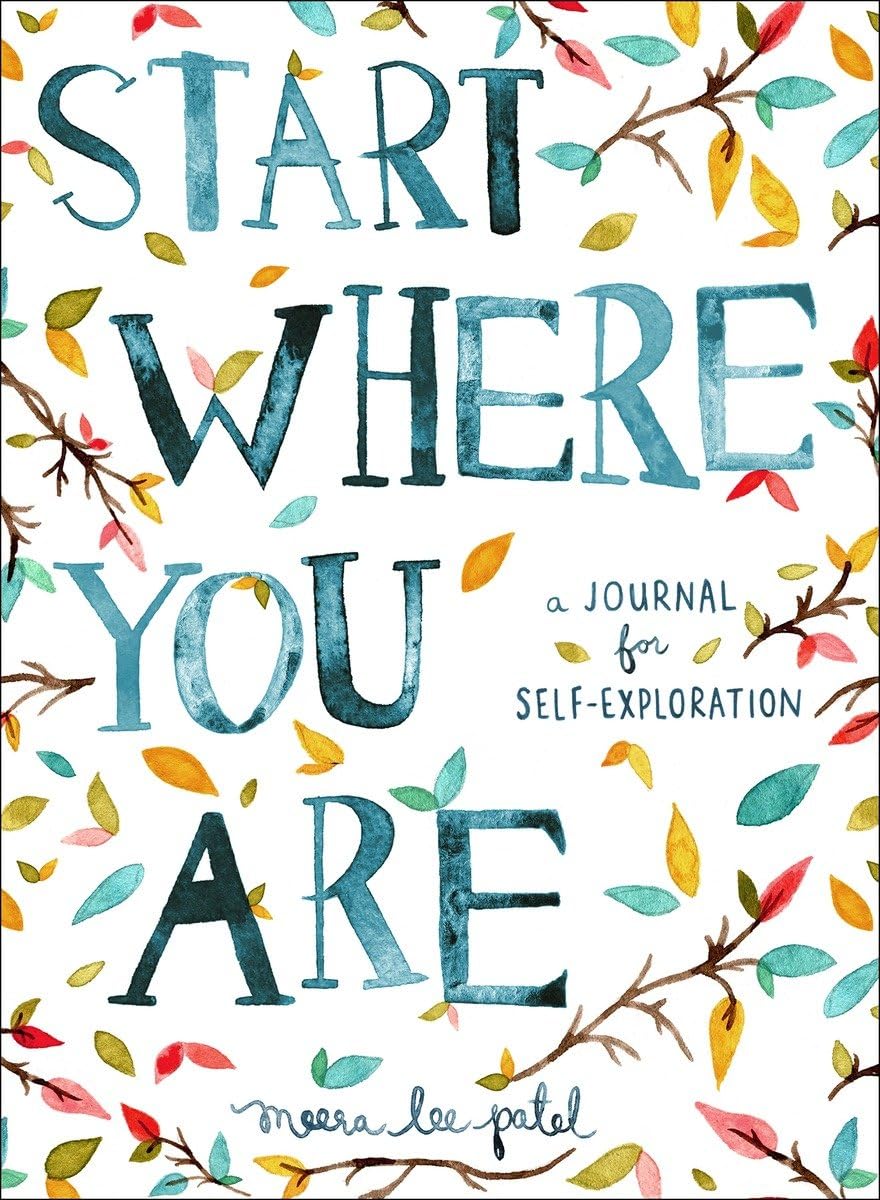
2. Start Where You Are: A Journal for Self-Exploration — Best for Beginners
Overview: Meera Lee Patel combines prompts with illustrations in a compact 128-page journal for personal exploration.
Key Features: Guided questions, creative exercises, illustrated pages, and a portable 5.48-by-7.49-inch format.
Pros: Friendly tone; compact size; easy entry point.
Cons: Less room than larger guided journals.
Best For: First-time journalers who find blank pages intimidating.
Verdict: The art-and-prompt mix feels inviting, while the smaller format travels easily.
3. Burn After Writing by Sharon Jones — Best for Budget-Friendly Candid Reflection
Overview: This 160-page journal uses direct questions and thought experiments for private self-examination.
Key Features: Personal prompts, self-exploration exercises, creativity-focused questions, and a compact paperback format.
Pros: Affordable; engaging prompts; encourages candor.
Cons: Some questions can feel confronting; not designed as a daily planner.
Best For: Readers who want blunt prompts instead of gentle gratitude exercises.
Verdict: It earns the budget pick by delivering substantial guided reflection in an affordable format.

4. The Shadow Work Journal by Keila Shaheen — Best for Deep Inner Work
Overview: This 272-page expanded edition explores limiting beliefs, hidden patterns, and the “shadow” side of self-awareness.
Key Features: Guided prompts, reflection exercises, meditations, added tips, and therapist-curated exercises.
Pros: Deep structure; substantial page count; specialized focus.
Cons: Heavier emotional subject matter; requires more time than quick daily journals.
Best For: Readers intentionally exploring recurring emotional patterns.
Verdict: It offers a deep guided framework, but suits deliberate inner work better than casual journaling.

5. 52 Lists for Calm by Moorea Seal — Best for Stress-Focused Reflection
Overview: This journal organizes reflection around 52 list-making prompts for calm, clarity, and recognizing what supports peace.
Key Features: Weekly list format, motivational prompts, self-care themes, and space for personal reflection.
Pros: Easy to start; less intimidating than essays; useful weekly rhythm.
Cons: List format may feel restrictive to narrative writers.
Best For: People who process thoughts better through short lists than long entries.
Verdict: It turns reflection into a manageable weekly practice for readers who want a calmer routine.

6. One Question a Day: A Five-Year Journal by Aimee Chase — Best for Long-Term Perspective
Overview: This journal asks one daily question and revisits the same date across five years, creating a personal time capsule.
Key Features: Five-year format, one daily question, repeated-date comparison, and compact entries.
Pros: Excellent for tracking change; quick to complete; encourages consistency.
Cons: Minimal space for deep writing.
Best For: Anyone curious about how opinions, priorities, and circumstances evolve.
Verdict: Its value grows as earlier answers become material for later self-reflection.

7. Present, Not Perfect by Aimee Chase — Best for Letting Go of Perfectionism
Overview: This 128-page journal centers on slowing down and self-acceptance through guided prompts.
Key Features: Guided exercises, self-care themes, illustrated presentation, and a compact 5.55-by-7.5-inch size.
Pros: Supportive tone; portable; clear theme.
Cons: Limited space for extensive entries.
Best For: Readers whose self-reflection often turns into self-criticism.
Verdict: It offers a softer alternative to analytical journals, helping you examine expectations without making reflection another productivity task.

8. The Daily Stoic Journal by Ryan Holiday and Stephen Hanselman — Best for Philosophy-Based Reflection
Overview: This journal provides 366 days of reflection around Stoic ideas and practical questions about how you live.
Key Features: Daily philosophical prompts, yearlong structure, recurring reflection, and companion-style use with Stoic reading.
Pros: Strong daily framework; thoughtful themes; long-term depth.
Cons: Best suited to readers interested in Stoicism.
Best For: People who want reflection anchored in a defined philosophy.
Verdict: Its framework suits readers examining judgment, behavior, resilience, and values.

9. Soul Therapy: A 365 Day Journal for Self Exploration, Healing and Reflection — Best for Prompt Variety
Overview: This yearlong journal provides a different self-exploration prompt each day.
Key Features: 365 prompts, daily format, self-discovery focus, and reflection-centered questions.
Pros: Broad prompt variety; easy daily direction; yearlong scope.
Cons: Simpler physical presentation than premium journals.
Best For: People who want a fresh question every day without a complicated system.
Verdict: The one-prompt rhythm keeps attention on personal insight without a repetitive daily template.

10. Self-Care: A Day and Night Reflection Journal — Best for a Structured Reset
Overview: Insight Editions designed this journal around a 90-day morning-and-evening reflection routine for self-care and awareness.
Key Features: Day and night prompts, 90-day structure, guided check-ins, and an integrated self-care theme.
Pros: Clear routine; defined finish line; balanced daily review.
Cons: Less flexible than open-ended journals.
Best For: Readers who want a focused three-month practice.
Verdict: Its limited timeframe feels achievable while providing enough repetition to establish a reflection rhythm.

How to Choose the Best Self-Reflection Journals
Start with prompt depth. Gratitude and short check-ins suit daily consistency, while shadow work and philosophical prompts demand more energy. Next, consider time commitment. A five-minute journal can be easier to sustain than extended writing.
Check writing space and format. Compact books travel well but may frustrate people who write several paragraphs. Lists suit fast thinkers, while open-ended prompts suit narrative processing.
Because these journals differ more in structure than in specifications, pay attention to binding, page size, prompt frequency, and whether the book lies open while you write. Also remember that reflective prompts can surface difficult emotions; choosing a gentler format may be wiser if you want self-awareness rather than intensive work.
Finally, choose a routine length that matches your goal. A 90-day journal creates a project, a 365-day journal supports repetition, and a five-year journal reveals gradual change. If consistency is your biggest challenge, SelfCraftr’s self-reflection routine guide offers practical ways to make reflection easier to maintain. Pick the structure you will actually return to.
Frequently Asked Questions About Self-Reflection Journals
1. Are guided journals better than blank notebooks?
They are often easier for beginners because prompts remove the need to decide what to write. Blank notebooks offer more freedom.
2. How often should I use a self-reflection journal?
Use the journal’s intended cadence. Daily, weekly, and morning-and-evening formats can all work when the schedule feels sustainable.
3. Can I skip prompts that feel irrelevant or uncomfortable?
Yes. Skip, adapt, or revisit prompts, especially when a question feels unhelpful.
4. What should I choose if I only have five minutes?
A brief format such as The Five Minute Journal or One Question a Day keeps writing predictable.
5. Are Self-Reflection Journals suitable as gifts?
Yes, but match the prompt style to the recipient. Gentle gratitude or creative prompts are usually safer than intensive shadow-work exercises.
Final Verdict
Among Self-Reflection Journals, the Five Minute Journal is best overall for an easy daily system. Burn After Writing is the best budget option for direct, candid prompts. The Five Minute Journal also takes the premium spot because of its more polished physical format. Start Where You Are is best for beginners, while The Shadow Work Journal is the strongest specialized choice for deeper inner work.
Before buying, compare formats and prompts, confirm dimensions, review current return details, and check the latest Amazon.com product information, seller, price, and availability.