
How to Rebuild Trust and Move Forward

We may earn a commission for purchases made using our links. Please see our disclosure to learn more.
Trust rarely breaks all at once. Usually, it cracks. A lie here. A broken promise there. A secret, a betrayal, a pattern of “I’ll do better” with no actual doing better. Then one day, the whole thing feels shaky, and you’re left wondering how to rebuild trust without pretending nothing happened.
That question hurts because trust is personal. It is not just about facts. It is about safety. It is about whether your nervous system can finally unclench around a person again.
In many cases, trust can be restored over time. Not always. Not quickly. And not with one perfect apology wrapped in a neat little bow. But with honesty, consistency, humility, and time, it can grow back. In this guide, you’ll learn how to rebuild trust in a relationship, how to rebuild self-trust, and what practical steps actually help when broken trust has left everyone tired and guarded.
Why Broken Trust Hurts So Much
When trust breaks, your brain does not treat it like a small paperwork error. It treats it like a threat. That is why people replay conversations, overanalyze tone, and suddenly become detectives with a PhD in “wait, that doesn’t add up.”
Broken trust also creates confusion. You may still love the person. You may still want the friendship, relationship, or partnership. But now your heart and your instincts are having an awkward team meeting.
That tension is normal. Trust issues are not always a sign of being dramatic. Sometimes they are your mind trying to protect you after emotional whiplash.
Start With the Full Truth
If you are the person who caused the damage, this part matters most: tell the truth fully.
Not the polished version.
Not the lawyer version.
Not the version that protects your image while asking for forgiveness.
Half-truths are trust termites. They keep chewing long after the first apology.
If you are the hurt person, get clear on what you need answered. Ask direct questions. Write them down if emotions make your brain feel like a browser with 47 tabs open.
A helpful reflection question is: What do I need to understand so I can decide whether safety is possible again?
Decide What Kind of Trust You’re Rebuilding
Not all trust is the same.
Sometimes you are rebuilding:
- Emotional trust after lying, secrecy, or betrayal
- Practical trust after missed responsibilities or unreliable behavior
- Relational trust after repeated conflict, disrespect, or broken boundaries
- Self-trust after ignoring your own gut for too long
This matters because the repair plan changes with the wound.
If someone cheated, “I’ll text you when I’m late” is not enough. If someone kept hiding bills, trust repair may require full financial transparency. If you stopped trusting yourself, the work may start with learning to believe your own feelings again.

Apologize Without Hiding Behind Excuses
A real apology is simple, clear, and uncomfortable in the right way.
How to recognize a sincere apology
It sounds like:
- “I hurt you.”
- “What I did was wrong.”
- “You did not deserve that.”
- “I understand why you do not trust me right now.”
- “I am ready to show change, not just say it.”
It does not sound like:
- “I’m sorry you feel that way.”
- “I only did it because you…”
- “Can’t we just move on already?”
Research backs this up. A 2019 study in Frontiers in Psychology found that apologies can improve trust and perceptions of trustworthiness, but the effect weakens when the hurt person is carrying very strong negative emotions. In plain English: an apology helps, but it is not magic, especially when the wound is deep.
Let Your Actions Carry the Apology
If trust is broken by behavior, it is rebuilt by behavior.
That sounds obvious, yet people still try to talk their way out of an action problem. Trust repair does not live in speeches. It lives in patterns.
If you said you would be transparent, be transparent.
If you said you would stop hiding things, stop hiding things.
If you said you would show up, show up before being chased.
You can think of it as restoring a damaged bridge. Every honest action is one more plank. One plank is nice. Fifty planks feel safe.
Give Space Without Going Cold
After betrayal or disappointment, many people need space. That doesn’t automatically mean the relationship is beyond repair. It means their system needs room to breathe.
Healthy space says, “I respect your pace, and I’m still here.”
Unhealthy space says, “Fine, let me know when you’re done being upset.”
Those are not the same thing.
If you are repairing trust, try saying:
“I understand that you need time. I won’t pressure you. I also want you to know I’m here and willing to keep doing the work.”
That kind of steadiness matters more than dramatic grand gestures.
Be Ready for Repeated Questions
One of the hardest parts of learning how to rebuild trust is accepting that the same conversation may happen more than once.
That does not automatically mean the other person is trying to punish you. Sometimes they are trying to make the story make sense in their body, not just in their mind.
Healing is repetitive. So is grief. So is trust repair.
If you are the hurt person, try to ask questions with a goal: clarity, not endless pain shopping. If you are the person rebuilding trust, answer patiently when reasonable. Defensiveness usually tells the other person, “You are still alone with this.”

Build Predictable Routines Again
Trust loves predictability.
Not because life should be boring, but because consistency makes people feel safe. Tiny routines can do more than big speeches.
That might look like:
- weekly check-ins
- shared calendars
- following through when you say you will call
- honest updates before being asked
- regular conversations about feelings, money, or boundaries
A 2021 systematic review of 20 years of employee trust-repair research found that using trust repair strategies early, especially after smaller violations, can stop things from escalating and improve repair efforts. The lesson carries well into everyday life too: do not wait until the roof caves in to fix the leak.
Set Boundaries That Create Safety
Boundaries are not punishments. They are structure.
If someone wants to regain trust, boundaries help answer the question, “What now has to be true for this relationship to feel emotionally safer?”
That could mean:
- no more hidden passwords
- no private contact with a certain person
- clear expectations around money
- therapy before deeper commitment
- pausing certain privileges until consistency returns
Boundaries are not about control. They are about clarity. And honestly, clarity is one of the kindest things people can give each other.
Rebuild Trust With Yourself Too
This part gets skipped all the time.
When trust breaks, you may not only lose faith in someone else. You may lose faith in your own judgment. You may think, How did I miss that? Why did I ignore the signs? Why didn’t I leave earlier?
That is where self-trust comes in.
Rebuilding self-trust means:
- believing your feelings without shaming them
- noticing red flags faster
- honoring your boundaries sooner
- letting your actions match your values
Sometimes the deepest repair is not “Can I trust them again?” but “Can I trust myself to protect my peace?”
Know That Forgiveness and Trust Are Different
You can forgive someone and still not trust them yet.
You can even forgive someone and never give them the same access again.
Forgiveness is often about releasing the grip of resentment. Trust is about earned safety. One can happen without the other. It’s not a sign that you’re cold, but that you’re being honest with yourself.
In some cases, part of healing is learning to let go of what no longer serves you so you can rebuild trust with yourself, even if the relationship does not continue.
Small Daily Habits That Help Trust Grow Back
Trust usually returns quietly.
Not with fireworks. More like sunlight slowly getting back into a room.
Try these small habits:
- say the hard truth faster
- keep one promise a day
- admit mistakes early
- ask, “What would help you feel safer with me?”
- notice improvement without forcing a finish line
If you are the hurt person, also pay attention to this question: Is trust actually growing, or am I just getting tired of holding the line?
That question can save you months of confusion.
Recommended Tools That Can Support the Process
These are not magic fixes. They are tools. Think of them like good walking shoes for a hard road: they do not walk for you, but they help.
BestSelf Intimacy Deck – 170 Conversation Cards for Couples, Fun and Romantic Card Game for Deeper Connection and Pillow Talk
Short description: A conversation card deck designed to make meaningful talks easier and less awkward.
Features: 170 prompts for couples, deeper connection, date-night friendly format.
Who it’s for: Couples who want structure for honest conversations but freeze when the room gets emotionally quiet.
The Seven Principles for Making Marriage Work by John M. Gottman and Nan Silver
Short description: A classic relationship guide with practical exercises and questionnaires.
Features: Research-based framework, practical guide format, long-standing popularity.
Who it’s for: Couples who want a proven, step-by-step resource rather than vague advice from random corners of the internet.
Eight Dates: Essential Conversations for a Lifetime of Love
Short description: A guided book built around key conversations that deepen intimacy and honesty.
Features: Eight themed conversations, tools for intimate discussion, focus on being honest about needs.
Who it’s for: Partners who need a calmer, more structured way to talk about trust, needs, conflict, and the future.
Securely Attached: Transform Your Attachment Patterns into Loving, Lasting Romantic Relationships by Eli Harwood
Short description: A gentle guide for understanding attachment patterns that shape how you trust and connect.
Features: Grounded in attachment theory research, focuses on changing patterns that block closeness.
Who it’s for: People who keep repeating the same relationship cycle and want to rebuild trust from the inside out.
52-Week Mental Health Journal: Guided Prompts and Self-Reflection to Reduce Stress and Improve Well-Being by Cynthia Catchings
Short description: A year-long guided journal for reflection, emotional check-ins, and mental wellness.
Features: daily prompts, self-reflection, four mental health pillars including calm, connection, purpose, and healthy living.
Who it’s for: Anyone rebuilding self-trust or trying to sort through emotions before hard conversations.
What Research Says About How to Rebuild Trust
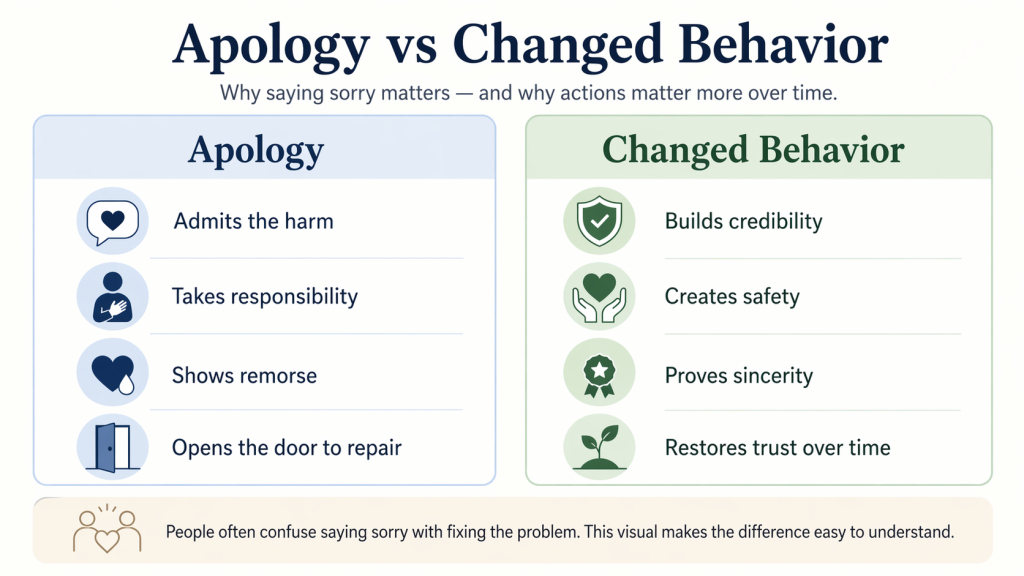
Research shows that rebuilding trust is possible, but it usually takes more than a simple apology.
One 2019 study on apology and trust repair found that apologies can help restore trust because they improve how trustworthy a person seems. However, the researchers also found that when someone is carrying strong negative emotions, an apology by itself may not be enough. In other words, words matter, but emotional repair and consistent behavior matter even more.
Another 2022 study on matching apology style to the type of trust violation found that written apologies were often more effective for integrity-based violations, while verbal apologies worked better for competence-based mistakes. That is a useful reminder that trust repair is not one-size-fits-all. Sometimes people need a heartfelt conversation. Other times, they need something thoughtful and clear that they can revisit later.
FAQs About How to Rebuild Trust
How much time does it take to rebuild trust?
It depends on the depth of the hurt, the pattern behind it, and whether the change is consistent. Minor trust breaks may improve in weeks. Deeper betrayal can take months or longer. Time alone does not fix trust. Honest behavior repeated over time does.
What’s the best way to regain trust after lying?
Start with the full truth. Then stop making the other person work to uncover more. Be transparent, answer questions, and match your words with boring, reliable consistency. Boring is underrated. Boring is how trust heals.
Can a relationship feel normal again after trust has been broken?
Sometimes, yes. But often the goal is not going back. It is building something better and more honest than before. “Back to normal” may actually mean “back to the version where problems stayed hidden.”
Can trust be restored when only one person is willing to work on it?
Not really, at least not relational trust. One person can improve communication, accountability, and self-awareness. But shared trust needs shared effort. Otherwise, you are not rebuilding a bridge. You are decorating one side of a canyon.
What can you do to rebuild trust in yourself?
Keep small promises to yourself. Notice what your body is telling you. Stop talking yourself out of your own standards. Self-trust grows when your inner voice and outer choices finally start acting like teammates.
Trust is rebuilt in moments that seem almost too small to count. The honest answer. The kept promise. The calm check-in. The boundary respected. The excuse not used.
So if you are wondering how to rebuild trust, start there. Not with perfection. Not with pressure. With truth, consistency, and enough courage to stay honest when honesty feels inconvenient.
That is how trust comes back. Slowly. Quietly. And when it is real, more solidly than before.