
Top 10 Habit Tracker Journals
We may earn a commission for purchases made using our links. Please see our disclosure to learn more.
Habit Tracker Journals turn repeated actions into visible progress. They suit students, professionals, wellness beginners, and anyone who struggles with routines. The right format can reduce daily decisions, connect habits with goals, and improve weekly reviews. We compared structure, tracking range, portability, paper quality, reflection tools, specialization, and value. Confirm current Amazon details before ordering.
Comparison Table
| Product | Best for | Key feature | Main limitation | Price category | Overall recommendation |
| Clever Fox Calendar | Overall tracking | Two-year overview | Large format | Mid-range | Most versatile |
| Daily Habit Tracker | Budget buyers | Fifteen monthly habits | Minimal guidance | Budget | Simple value |
| BestSelf Self Journal | Premium planning | Thirteen-week system | Learning curve | Premium | Goal focused |
| Panda Planner Classic | Beginners | Guided daily pages | Short daily cycle | Mid-range | Easy start |
| Morning Sidekick | Morning routines | Sixty-six-day coaching | Narrow purpose | Mid-range | Strong specialist |
| Essential Habits | Behavior change | Good/bad habit system | Less scheduling space | Mid-range | Visual accountability |
| Freedom Mastery Journal | Reflection | Prompts and vision board | Busy layouts | Mid-range | Deep guidance |
| Legend Planner | Time management | Weekly habit tracking | Small writing areas | Mid-range | Flexible organizer |
| Phoenix Journal | Quarterly goals | Twelve-week framework | Goal-heavy format | Mid-range | Focused progress |
| Dailygreatness Wellness | Health routines | Food and exercise pages | Bulky and expensive | Premium | Wellness specialist |
1. Clever Fox Habit Tracker Calendar — Best for Overall Tracking
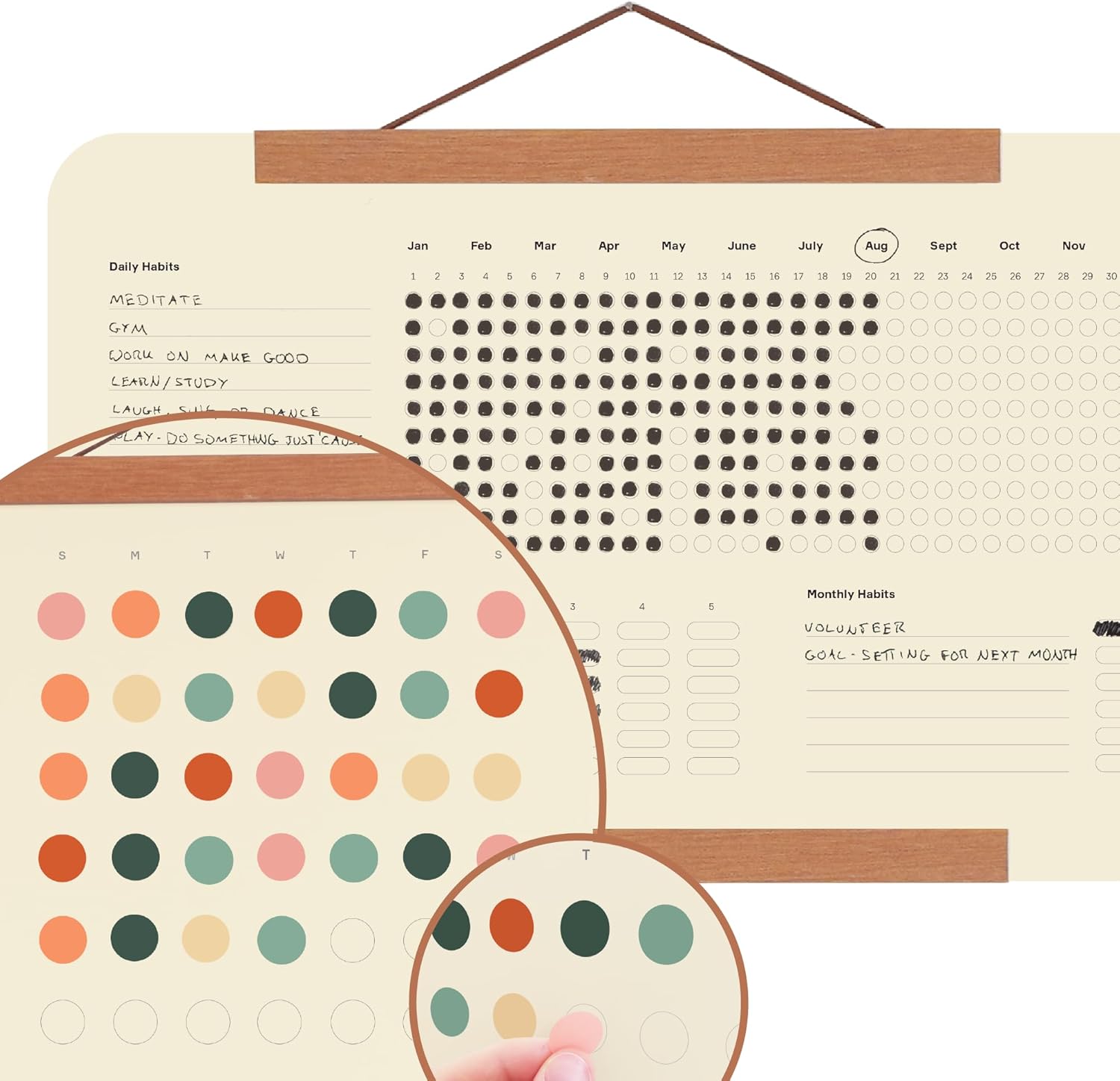
Overview: This undated landscape calendar emphasizes visible streaks. It suits people managing routines across home, fitness, learning, and work.
Key features: Twenty-four monthly spreads; space for twelve daily, five weekly, and five monthly habits; 10-by-8-inch format; 120gsm paper; motivational prompts.
Pros: Long tracking horizon, roomy charts, and quick scanning.
Cons: Less portable than A5 journals and limited long-form reflection space.
Best for: Visual planners tracking many routines.
Verdict: Its broad capacity and two-year lifespan make it the strongest overall choice.

2. Daily Habit Tracker Planner Journal — Best for Budget Buyers
Overview: This straightforward notebook uses monthly grids for users who want checkmarks and short notes without coaching.
Key features: Thirty-one-day charts; room for up to fifteen tracked items; compact paperback construction; monthly goal and progress space.
Pros: Affordable, uncomplicated, and flexible across habit types.
Cons: Basic binding and little guidance for defining or reviewing habits.
Best for: Experienced trackers, students, or budget-conscious shoppers.
Verdict: It delivers practical capacity without decorative extras or complicated setup.

3. BestSelf Self Journal — Best for Premium Goal Planning
Overview: The Self Journal combines habit tracking with a thirteen-week goal cycle for users linking routines to measurable outcomes.
Key features: SMART-goal planning; daily scheduling; gratitude prompts; weekly habit trackers; weekly reviews; hardcover format.
Pros: Cohesive goal system, substantial reflection, and durable presentation.
Cons: More setup than a simple tracker, and dense pages may overwhelm casual users.
Best for: Goal-driven professionals and serious planners.
Verdict: It connects daily behavior, time, reflection, and quarterly results.

4. Panda Planner Classic A5 — Best for Beginners
Overview: Panda Planner uses guided daily, weekly, and monthly sections. Habit tracking sits beside priorities, gratitude, scheduling, and review.
Key features: Undated layout; A5 size; hourly schedule; task lists; habit tracker; gratitude sections; 100gsm paper.
Pros: Clear prompts, portable dimensions, and balanced planning tools.
Cons: Daily pages can feel repetitive, while the usable planning period is shorter than yearly journals.
Best for: Beginners who need structure and encouragement.
Verdict: Its guided layout lowers starting friction and places habits within an organized day.

5. Habit Nest Morning Sidekick Journal — Best for Morning Routines
Overview: This guided journal builds a reliable morning routine through daily lessons, prompts, and accountability.
Key features: Sixty-six days of tracking; three habit-formation phases; approximately five minutes of daily use; routine-building lessons; reflection prompts.
Pros: Focused coaching, manageable daily commitment, and changing content that reduces monotony.
Cons: Poor fit for users wanting broad monthly tracking or evening routines.
Best for: Night owls, inconsistent starters, and morning-routine beginners.
Verdict: Its specialization is more actionable than a blank grid for rebuilding mornings.

6. Essential Habits 2-in-1 Habit Tracker — Best for Breaking Bad Habits
Overview: Essential Habits separates behaviors to build from patterns to reduce, favoring accountability over appointment planning.
Key features: Two-in-one tracking concept; goal-setting pages; progress reviews; visual charts; sections for positive and unwanted habits.
Pros: Clear behavior-change focus and an engaging presentation.
Cons: Limited calendar functionality, and users seeking extensive journaling space may find it restrictive.
Best for: People replacing an unwanted routine with a healthier alternative.
Verdict: The paired build-and-break framework offers a perspective ordinary streak trackers miss.
7. Freedom Mastery Daily Journal — Best for Guided Reflection
Overview: Freedom Mastery blends ninety-day tracking with gratitude, productivity, mindfulness, and reflection prompts.
Key features: A5 size; morning and evening questions; habit trackers; mind maps; reflection pages; foldout vision board; stickers and back pocket.
Pros: Rich guidance, multiple reflection methods, and attractive extras.
Cons: The feature-heavy design can feel crowded, especially when you only need quick tracking.
Best for: Reflective users who enjoy guided personal-development exercises.
Verdict: It helps users examine why routines matter, not merely whether boxes were checked.

8. Legend Planner Undated A5 — Best for Time Management
Overview: Legend Planner integrates weekly tracking with appointments, priorities, goals, lists, and reflection.
Key features: Undated monthly and weekly layouts; habit trackers; goal-planning worksheets; to-do lists; reflection sections; A5 hardcover design; 120gsm paper.
Pros: Broad planning coverage, portable size, and flexible start date.
Cons: Habit sections are smaller than dedicated tracking calendars.
Best for: Busy users wanting one notebook for routines and schedules.
Verdict: It is sensible when carrying separate planners and trackers feels wasteful.

9. The Phoenix Journal — Best for Quarterly Goals
Overview: The Phoenix Journal converts larger ambitions into weekly and daily actions across twelve weeks.
Key features: Undated quarter; daily planning; weekly and monthly reviews; goal worksheets; habit tracking; vision-board component; A5 format.
Pros: Defined finish line, frequent reviews, and strong goal alignment.
Cons: Less suitable for casual lifestyle tracking with no specific outcome.
Best for: Entrepreneurs, creators, students, and project-based goals.
Verdict: Its quarter-length structure creates urgency while allowing routines time to develop.

10. Dailygreatness Wellness Journal and Planner — Best for Wellness Tracking
Overview: This yearly journal connects habits with food, exercise, mindset, shopping, and goal planning.
Key features: Fifty-two undated weeks; daily food and exercise journal; weekly shopping lists; quarterly and yearly check-ins; healthy-habit reminders; 468 full-color pages.
Pros: Extensive health context, long duration, and detailed reviews.
Cons: Premium cost, large footprint, and more writing than minimalist users need.
Best for: Wellness-focused users tracking interconnected lifestyle behaviors.
Verdict: Its specialized pages make it the most complete holistic-health option.

How to Choose the Best Habit Tracker Journals
Start with the number and frequency of behaviors you will realistically track. Monthly grids suit simple yes-or-no actions, while daily pages provide context about time, mood, obstacles, and results. Avoid buying space for twenty habits when three meaningful routines would be easier to maintain.
A tracker should also match your tolerance for prompts: blank grids encourage customization, while guided questions reduce uncertainty but demand more writing. Choose the lightest structure that still gives you enough information to adjust your routine.
Choose a review rhythm. Weekly reviews reveal friction quickly; monthly charts make streaks and gaps easier to see; twelve-week systems connect routines with a defined outcome. For a practical framework that turns goals into repeatable action, SelfCraftr’s productivity tips explain priorities, time blocking, recovery, and weekly adjustment.
Consider portability and writing comfort. A5 books travel well, whereas landscape calendars offer larger grids. Thicker paper can reduce show-through, but pen performance varies, so check current product details. Undated journals prevent wasted pages after a missed week. Finally, decide whether you need pure tracking, guided reflection, scheduling, wellness logs, or goal planning. The best journal removes friction instead of creating another routine to manage.
Frequently Asked Questions About Habit Tracker Journals
How many habits should a beginner track?
Begin with two or three behaviors that are specific and easy to verify. Add another only after the recording process feels automatic.
Are dated or undated journals better?
Undated journals are more forgiving when you pause or start midyear. Dated versions provide stronger calendar structure but can create wasted pages.
Should I track outcomes or actions?
Track controllable actions, such as walking twenty minutes, rather than uncertain outcomes. Record outcomes separately when they help you evaluate whether the habit works.
What happens when I miss a day?
Mark it honestly, note the obstacle if useful, and resume at the next opportunity. A tracker should reveal patterns, not turn one gap into abandonment.
Can one journal track work and wellness habits?
Yes, provided the layout has enough categories or writing space. Separate sections may help when professional tasks and personal routines require different review questions.
Final Verdict
Clever Fox is the best overall choice for broad, visual tracking. The Daily Habit Tracker Planner Journal is the best budget option, while BestSelf offers the strongest premium goal system. Panda Planner is friendliest for beginners, and Habit Nest is the standout specialized pick for morning routines. Compare layouts, dimensions, paper, current warranty terms, and Amazon product information before purchasing; the journal you will open consistently is more valuable than the most elaborate one.