Fidget Toy Stress Relief: How to Choose What Works for You

We may earn a commission for purchases made using our links. Please see our disclosure to learn more.
Your hands start tapping during a tense meeting. You reach for your phone while waiting for an important call. Sometimes, keeping your fingers busy feels easier than sitting perfectly still. That is where fidget toy stress relief may fit into your routine.
A fidget toy gives your hands a simple, repeatable action, such as squeezing, rolling, twisting, or clicking. Some people find that sensation comforting; others find it distracting. The difference depends on the toy, the setting, and what you need at that moment.
This guide explains how fidgets might help, what research actually supports, and how to choose a practical option without paying for exaggerated promises. You will also find five different products worth considering, plus tips for using them safely and effectively.
What Can Fidget Toys Actually Do for Stress?
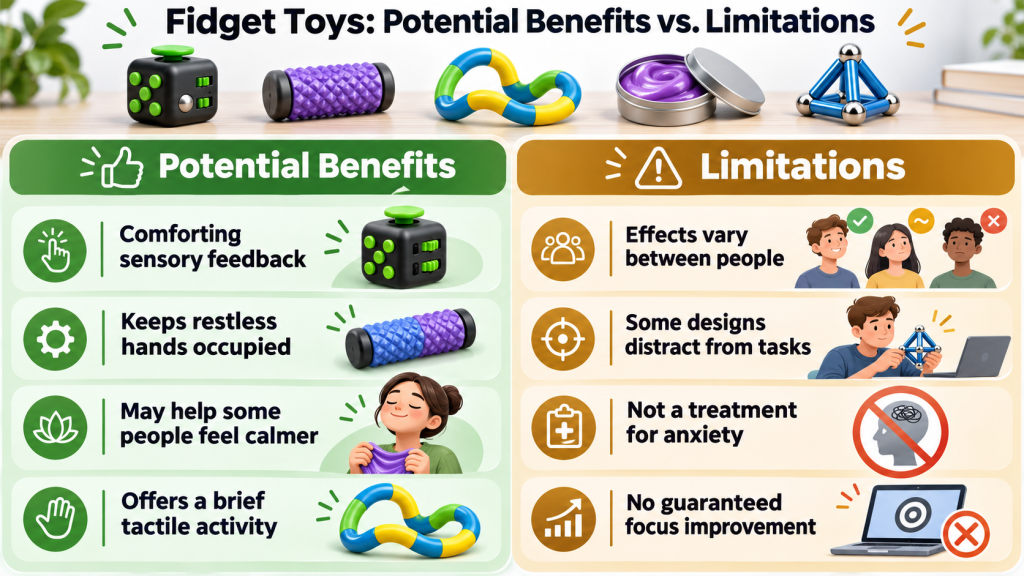
Fidget toys give restless hands something predictable to do. Squeezing a cube or rolling an object across your palm might feel comforting while you wait or listen.
Results vary. One person feels settled after a few squeezes; another becomes absorbed in the object and misses the conversation. Think of a fidget as an optional coping aid, not a treatment for anxiety or a guaranteed concentration boost.
If stress disrupts daily life, seek appropriate support.
Why Repetitive Hand Movements May Feel Calming
The pressure of a squeeze or the smooth motion of a roller creates a familiar sensation to notice during an uncomfortable moment.
For some people, that sensory input becomes an attention anchor: noticing their fingers briefly interrupts spiraling thoughts. It does not remove the cause of stress, and responses differ.
Try gently pressing and releasing a toy. If the movement feels irritating or makes you more agitated, set it aside. Never force an uncomfortable technique.
Different Types of Fidget Toys and Their Uses
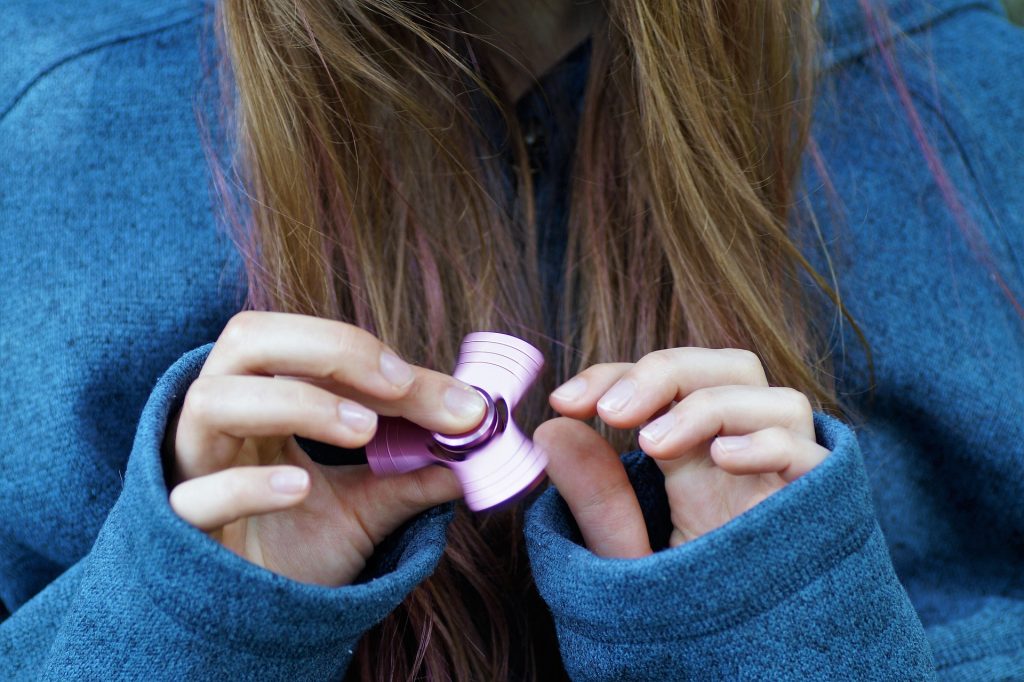
Different designs suit different movements.
- Squeeze toys: Soft cubes offer pressure and release.
- Rollers: Smooth cylinders move continuously, often quietly.
- Twist toys: Linked sections turn into loops and shapes.
- Putty: Kneading offers resistance but requires careful storage.
- Puzzle fidgets: Folding shapes reward exploration but demand visual attention.
Choose based on what your hands find comfortable. A simple squeeze toy may suit a tense phone call; a magnetic puzzle makes more sense during a break. No single type suits everyone.
Choose a Texture and Resistance That Feel Comfortable
A toy that feels unpleasant will not become a useful habit. Smooth plastic differs from squishy gel, metal, or stretchable putty. Preference matters more than popularity.
Resistance affects comfort too. Firm squeezing might tire your hands after repeated gripping. If you have hand pain or limited grip strength, prioritize gentle movement and never push through discomfort.
When trying a fidget, notice its surface, the force required to move it, and how your hand feels afterward. Choose something comfortable.
Quiet Versus Clicky Fidgets: Which Is Better?
Quiet fidgets suit meetings, lectures, libraries, and shared offices. Soft squeezers and smooth rollers let you move your hands without interrupting others.
Clicky buttons offer satisfying audible feedback during private breaks, but colleagues may find that noise distracting.
Consider your usual setting before buying. A toy that feels fun at home could be awkward on public transport. If silence matters, check how each mechanism operates: a product labeled “quiet” is not necessarily soundless. Use louder fidgets privately.
How to Use a Fidget Toy During a Stressful Moment
When tension rises, try a comfortable movement for about half a minute. Relax your shoulders, breathe naturally, and keep attending to your task.
Then check whether it helped: are your hands calmer, or is the toy distracting? Set it down when necessary.
Pair it with other strategies, such as a short walk. For more structured ideas, try this 30-day mindfulness challenge and choose one small practice to pair with your fidget.
Best Fidget Toys for Work, Studying, and Travel
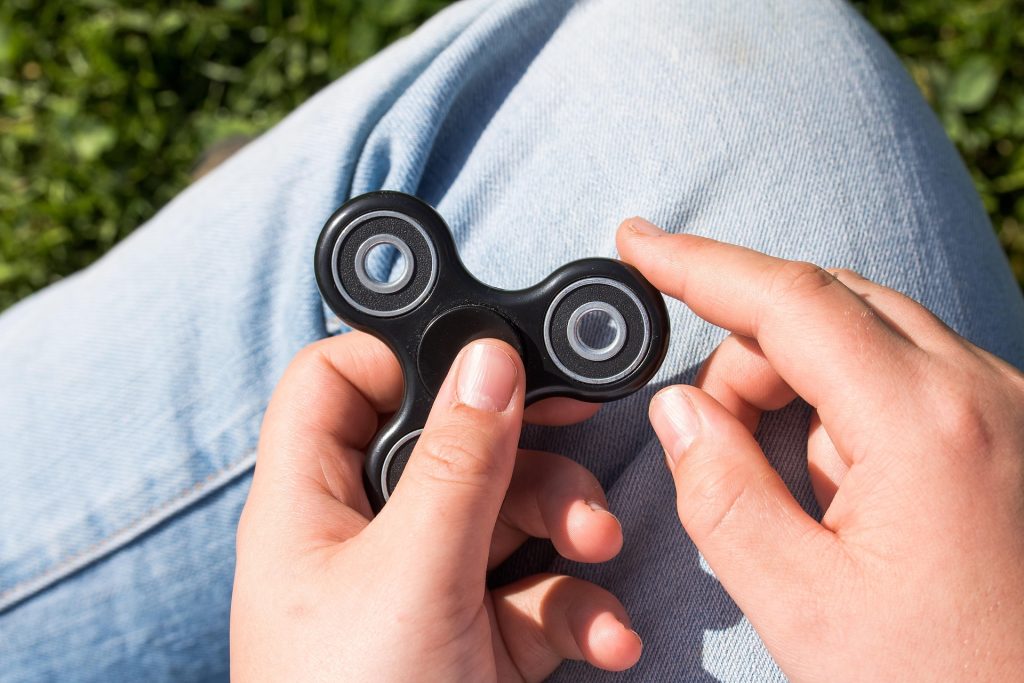
Choose a fidget for its setting. At work, a quiet, one-handed design lets you listen while keeping your fingers busy. For travel, prefer compact toys without loose parts or leak-prone filling.
Studying requires caution. If you keep looking at a magnetic puzzle instead of your notes, reserve it for breaks.
At home, you can experiment with putty or noisier mechanisms. One dependable toy near your usual workspace may prove more useful than an entire collection. Store putty carefully.
Can Fidget Toys Improve Focus or Help With ADHD?
Some people with ADHD find fidgets comforting, but evidence does not show every toy improves attention. A quiet squeeze also differs from a visually engaging spinner.
Compare a short task with and without the toy. Does it help you stay engaged, or create another activity? Judge your concentration, not marketing.
Fidgets cannot replace ADHD assessment, treatment, or accommodations. For children struggling in class, discuss sensory supports with teachers or qualified professionals instead of assuming a toy will solve their difficulties.
Features to Check Before Buying a Fidget Toy
Choose something that fits your hand and daily setting. Check:
- Movement: Can you use it without looking down?
- Noise: Will clicking bother other people?
- Portability: Does it fit a pocket?
- Build: Are seams and joints secure?
- Care: Is cleaning straightforward?
Gel fillings, removable sections, and magnets require extra attention to age guidance and warnings. For a first purchase, a simple design is usually easier to evaluate than a multipack of unfamiliar toys. For shared toys, prioritize cleaning.
Safety Considerations for Children and Adults
Age guidance matters, especially with detachable pieces or magnets. The U.S. Consumer Product Safety Commission’s magnet guidance explains why swallowed high-powered magnets can cause serious internal injuries.
Supervise younger children, inspect magnetic toys for damage, and never assume a soft toy is safe to chew. Discard squeezers when filling leaks.
Follow manufacturer warnings: Schylling advises against heating, freezing, or microwaving its NeeDoh Nice Cube. If magnet ingestion is suspected, seek urgent medical care.
How to Clean and Maintain Fidget Toys
Clean toys handled during commutes or shared with others. Follow the maker’s directions rather than soaking every material in the same solution.
Hard surfaces may tolerate gentle wiping, while putty and enclosed mechanisms need different care. Tangle recommends mild soap and water, not a dishwasher. Keep putty away from fabrics and return it to its tin afterward.
Inspect seams, joints, and coverings periodically. Replace toys that leak, crack, shed pieces, or stop moving properly. Keep them away from lint during storage.
Five Fidget Toy Stress Relief Options Worth Considering
Compare five distinct styles before choosing one that fits your setting and sensory preferences.
1. Schylling NeeDoh Nice Cube – Sensory Squeeze Toy
Best for: People who prefer firmer squeezes.
The Nice Cube has a distinctive feel: it yields more slowly under gentle pressure and feels firmer when compressed quickly. Its approximately 2.25-inch shape returns to a cube after use, making it a straightforward desk fidget. Colors vary by package, and the manufacturer warns against heating or freezing it.
2. ONO Roller – Handheld Fidget Toy, Black, Full Size Aluminum
Best for: Adults who need discreet movement in quiet settings.
The ONO Roller uses paired rotating cylinders to create a smooth, continuous hand motion without the clicking of a spinner. Its aluminum construction and handheld design make it suitable for a work desk or commute. It costs more than a basic squishy toy, and people seeking a soft texture may find metal less appealing.
3. Tangle Creations 188549 Tangle Jr. Classic
Best for: People who prefer twisting instead of squeezing.
This compact Tangle features connected curved plastic segments that turn into loops as you move them through your fingers. Twisting can be intuitive while listening. Its sections can separate, however, so it is inappropriate for children under three and needs occasional checks for loose joints.
4. Crazy Aaron’s Thinking Putty – Liquid Glass
Best for: Tactile breaks involving stretching and kneading.
Liquid Glass is a clear silicone-based putty supplied in a four-inch tin. It clouds when handled and clears at rest. Unlike stretchier putties, this formulation breaks more readily and does not bounce, so it suits gentle sensory play better than vigorous pulling. Keep it away from fabrics and put it back in the tin.
5. Shashibo DODECA Magnetic Puzzle Cube
Best for: Creative breaks that engage both hands and attention.
The DODECA is a magnetic shape-shifting puzzle with panels that fold into different geometric forms. It offers more variety than a single-motion fidget and can be enjoyable between demanding tasks. Because solving shapes requires visual attention, it is less suitable for quietly listening during a meeting. Check its age guidance and keep any damaged magnetic pieces away from children.
What Research Says About Fidgets and Anxiety
Evidence is mixed, and researchers have studied different toys in very different situations. A 2024 experiment using a vibrating stress ball found reductions in reported anxiety and physiological arousal after brief squeezing. That result concerns a particular vibrating device, not every ordinary stress ball.
Other findings are less encouraging. In a 2018 randomized clinical trial involving skin surgery, stress-ball use did not significantly reduce anxiety compared with usual care. A 2025 study of adults with ADHD found no significant group differences in several physiological stress measures when participants had access to a fidget ball.
Focus deserves separate scrutiny: a 2020 study of college students watching video lectures linked fidget-spinner use to poorer memory performance. Together, these results suggest trying a fidget as a personal comfort strategy, then judging its effect on your actual task rather than accepting broad claims.
Frequently Asked Questions About Fidget Toy Stress Relief
Do fidget toys really reduce stress?
They may make stressful moments feel easier for some people, but results are not guaranteed. Repetitive movements can provide a familiar sensation or a brief distraction. Research findings vary by setting and device, so pay attention to your own response. Persistent anxiety deserves professional support.
Which fidget toy is best for anxiety at work?
A quiet, one-handed toy is generally the most considerate choice in a shared workspace. Smooth rollers and soft squeeze toys let you keep your gaze on a conversation or screen. Avoid mechanisms that click repeatedly if colleagues sit nearby. Choose something you can use without watching it.
Can adults benefit from using fidget toys?
Yes. Many fidgets are designed for adults or can be used comfortably by adults, including rollers, twist toys, and putty. Select the texture and movement that suit your preferences rather than focusing on playful colors. At work, prioritize a compact, easy-to-clean design.
Can fidget toys make anxiety or distraction worse?
They can, especially if the texture feels unpleasant, a clicking sound increases tension, or the toy becomes more interesting than the task. Stop if you notice irritation, hand discomfort, or reduced concentration. You might prefer slower squeezing, a quieter object, or no fidget at all. Comfort matters more than habit.
How long should I use a stress-relief fidget toy?
There is no established ideal duration for everyday fidget use. Begin with brief periods during waiting or transitions and notice how your hands and attention respond. Put the toy down when you feel uncomfortable or need both hands for another task. Continuous use is unnecessary.
Conclusion: Finding the Right Fidget for Stress Relief
The most useful fidget is not necessarily the trendiest one. It is the object that feels comfortable, suits your environment, and keeps your hands occupied without hijacking your attention. If you enjoy pressure, the Schylling NeeDoh Nice Cube is a straightforward place to start. For quiet, continuous movement, the ONO Roller may be a better fit.
Think of fidget toy stress relief as one small option within a broader stress-management routine. Research does not support treating these products as cures for anxiety or guaranteed focus boosters, but some people value their predictable sensory feedback. Start with one style, test it during an ordinary stressful moment, and notice whether you feel more settled and stay engaged. Keep it only if it genuinely helps.