
Goal Setting Vision Board: How to Create One That Leads to Action

We may earn a commission for purchases made using our links. Please see our disclosure to learn more.
Have you ever made a list of goals, felt excited for a few days, and then forgotten where you put it? A goal setting vision board offers a more visible way to remember what matters. By combining images, short phrases, and practical next steps, you can turn scattered ambitions into something you regularly revisit.
But a beautiful collage is not a plan. Pictures of dream homes, thriving businesses, or peaceful mornings cannot do the work for you. A useful board connects those images with choices you can make this week.
This guide explains how to choose meaningful goals, create a physical or digital board, organize it without overcomplicating the design, and use it to monitor real progress. You will also find practical supplies, research-based guidance, and ideas for keeping your board relevant as life changes.
What a Goal Setting Vision Board Actually Does
A vision board is a collection of pictures, words, or symbols representing outcomes and experiences you want to work toward. It can help you clarify priorities and bring those priorities back into view during an ordinary day.
A photograph of a graduation cap might stand for finishing a qualification; a calendar note beside it can remind you to register for the next class.
Decide What You Want Before Gathering Images
Start with reflection rather than searching for perfect pictures. Ask yourself what you want to change, what is already going well, and which goals would genuinely improve your everyday life.
Select three to five priorities for the coming months. Separate your own interests from expectations borrowed from friends or social media. If owning a luxury car looks impressive but reducing financial stress matters more, choose an image representing stability instead.
Include ordinary experiences, not just achievements.

Choose Between a Physical and Digital Vision Board
A physical board works well if you enjoy crafting and have a place where you can see it. Corkboards allow easy rearranging; poster boards are lightweight and inexpensive but are less convenient to update once images are glued down.
A digital collage suits smaller homes, shared spaces, and people who regularly use a phone or laptop. You can assemble pictures in a design app and save the result as a background or reference image.
Choose the version you will realistically check and update.
Gather Meaningful Pictures, Words, and Materials
Select images that communicate a specific personal meaning. For a fitness goal, a walking trail or pair of trainers may feel more relevant than a photograph of a professional athlete. Include short phrases describing values, habits, or milestones.
For a paper board, gather a base, printed photographs or magazine cutouts, scissors, adhesive or pins, and something to write with. Digital boards need only an image collection and an editing tool.
Use permitted images, particularly for public boards.
Build Your Goal Setting Vision Board Step by Step
First, divide the available space into a few areas, such as wellbeing, work, relationships, and learning. Put your highest priority in the most visible area.
Next, arrange your chosen images without attaching them. Remove anything that feels decorative but lacks a clear purpose. Add a short label to each group and one practical next step beneath each major outcome.
Finally, secure the pieces, photograph your board for reference, and decide when you will review it.
Turn Every Image Into a Clear, Measurable Goal
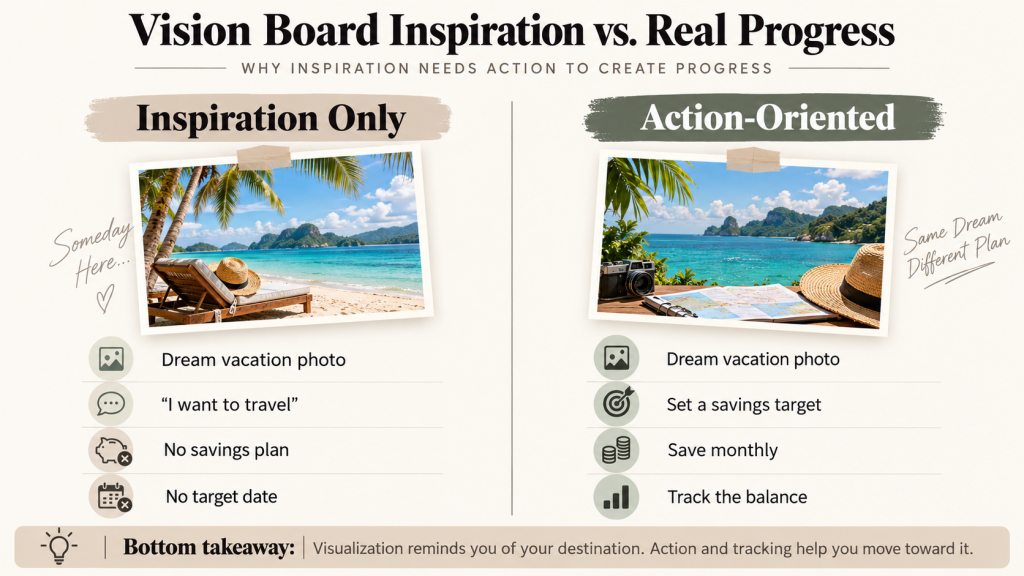
A picture describes a direction; a written target defines progress. Instead of attaching a suitcase and writing “travel more,” specify “save for a weekend trip by June” and decide how much to set aside each month.
Set a realistic deadline. For career goals, track finished lessons or applications rather than assuming a guaranteed promotion.
For a structured way to refine those targets, explore smarter goals and how to adjust them as circumstances change.

Connect Your Vision Board to a Weekly Action Plan
At the beginning of each week, choose one small action for each active priority. Put those actions on your calendar, making the time and task specific enough that you know exactly when to start.
For example, a board featuring a finished novel might connect to “write for 30 minutes on Tuesday and Thursday after breakfast.”
Keep your weekly list short. Focus on the few actions that make a noticeable difference.
Vision Board Ideas for Different Areas of Life
A useful board does not have to focus on money or possessions. Different goals call for different kinds of imagery and evidence of progress.
- Career: A completed portfolio, training certificate, or presentation you want to deliver.
- Money: An emergency-fund thermometer or a picture representing a specific savings goal.
- Health: A favorite walking route, balanced meal ideas, or a bedtime routine.
- Relationships: A shared activity, a family tradition, or time reserved for friends.
- Personal growth: Books to study, a language-learning milestone, or a creative project.
Avoid images that encourage unhelpful comparison.
Place Your Board Where You Will Actually Use It
A board behind a door or buried in a folder may be easy to forget, while one in a shared room may expose goals you prefer to keep private.
Consider placing it beside your desk, inside a wardrobe door, or in a regularly opened digital notebook. Pair a quick review with an existing routine, such as planning Monday morning or checking your calendar on Sunday.
Avoid Common Vision Board Mistakes
The biggest mistake is treating a collage as a substitute for action. You still need a schedule and realistic expectations.
Other traps include copying someone else’s aspirations, adding too many unrelated goals, and choosing only dramatic end results. Show the process too: study notes beside a diploma or a savings tracker beside a holiday photograph.
A goal can become less suitable without making the original effort wasted. A board is meant to serve your life, not control it.
Review Progress and Refresh Your Vision
Give yourself a few minutes each week to notice completed actions and identify your next task. Once a month, take a longer look at your deadlines, obstacles, and available time.
Note what moved forward or stalled. Replace finished goals with the next milestone, and remove priorities that no longer fit. Keeping an image just because you liked it six months ago can dilute your focus.
Celebrate measurable progress without requiring perfection.
What Research Reveals About Goals, Planning, and Progress
Direct evidence that vision boards themselves cause success is limited. Stronger research supports techniques you can build into your board: concrete goals, specific plans, and progress checks.
A 2017 systematic review and meta-analysis of goal setting examined randomized trials and found a small positive effect on behavior change. A 2016 meta-analysis of progress monitoring involving 138 studies found that encouraging people to monitor progress improved goal attainment, particularly when results were recorded or reported.
A 2024 review of implementation intentions analyzed 642 independent tests and found positive effects for if-then planning across different outcomes. For example: “If I miss my scheduled walk, then I will take a shorter walk after lunch.”
These findings concern planning behaviors, not decorative collages. Treat the board as a place to display and revisit evidence-based actions, not as proof that visualization alone delivers results.
Recommended Products for Creating a Vision Board
You do not need expensive materials. These five tools serve different tasks, from building a reusable display to adding prompts you can change as your priorities evolve.
U Brands Cork Bulletin Board, 18 x 24 Inches, Light Birch Wood Frame (265U00-01)
Best for: A reusable, wall-mounted physical board.
This cork bulletin board provides an 18-by-24-inch surface for arranging goal images, milestones, and notes with pins. Its light birch-style frame suits a home office, and the included mounting hardware supports vertical or horizontal hanging. It comes with only two push pins, so a fuller collage will require more.
Bold Tuesday Vision Board Book Magazine for Women – 1000+ Diverse Pictures, Quotes, Self-discovery Exercises
Best for: Beginners who need ready-made collage inspiration.
Bold Tuesday’s vision board book includes a large selection of pictures and quotes alongside self-reflection exercises. It can simplify the search for images when magazines or printed photographs are unavailable. The curated, women-focused collection may not suit every goal or visual style.
Elmer’s CraftBond Repositionable Glue Sticks, 4-Pack (E4020)
Best for: Paper collages that need flexible arrangement.
These repositionable glue sticks let you adjust cutouts while building a paper vision board, which is helpful when images overlap or your layout changes. The clear adhesive suits scrapbook-style projects without requiring pins. It is still an adhesive, however, so test delicate photographs or specialty paper before committing important originals.
Post-it Super Sticky Notes, 3 x 3 Inches, 24 Pads
Best for: Changeable action steps and weekly reminders.
These square sticky notes give you room to write deadlines, habits, or the next action beneath a larger goal image. Their adhesive is designed for sticking to vertical surfaces, making them practical for a smooth poster or nearby wall. Paper notes can curl or detach over time, so preserve essential deadlines in your planner too.
Sharpie S-Note Creative Highlighters, Assorted Pastel Colors, 12 Count
Best for: Clear labels and color-coded priorities.
This 12-count pastel marker set uses chisel tips that can make both narrow marks and broader highlights. The colors distinguish goals and upcoming milestones. Test the ink on your chosen paper first, particularly if you are using thin magazine clippings.
Frequently Asked Questions About Goal Setting Vision Boards
Can vision boards really help you achieve your goals?
They can be useful reminders and planning tools, but there is no strong evidence that simply looking at desired outcomes makes them happen. Their practical value comes from clarifying priorities and prompting specific behavior. Pair each inspiring image with a next action, deadline, or progress measure, then revisit those commitments regularly.
How many goals should I include on my vision board?
Three to five active priorities are a manageable starting point for many beginners, although there is no scientifically established ideal number. Choose enough goals to reflect what matters without creating visual overload. You can maintain a separate list for longer-term ambitions and rotate them onto the board when you have the capacity to act.
Can I make a vision board without printing pictures?
Yes. A digital collage can combine your own photos, text, icons, and permitted images using a phone or computer. Save it somewhere you will actually open, such as a planning app or device background. If you prefer hands-on work, handwritten goals and simple sketches are equally acceptable alternatives to printed photographs.
How frequently should I refresh or revise my vision board?
Review your actions weekly and reconsider the board itself every month or whenever circumstances change substantially. You do not need to rebuild the entire layout each time. Replace completed milestones, remove goals that are no longer relevant, and adjust dates or action notes when your original plan becomes unrealistic.
Should I use affirmations on a goal setting vision board?
You can, if they feel meaningful rather than forced. Prefer phrases linked to behavior, such as “I practice consistently” or “I ask for help when needed,” over promises that guarantee an outcome. An affirmation works best as a reminder of how you intend to act, not as a replacement for learning, effort, or support.
Conclusion: Create a Board You Can Act On
An effective goal setting vision board makes your priorities visible and connects them to decisions you can control. Begin with a handful of goals that genuinely matter, choose a physical or digital format that fits your routine, and use images that represent both desired outcomes and the work required to reach them.
If you want to rearrange pictures regularly, the U Brands corkboard is a practical starting surface. If you prefer to change action prompts without redesigning the collage, Post-it Super Sticky Notes can keep the next steps visible.
Most importantly, schedule time to review progress and revise the plan. Build your first board around three priorities, add one actionable step to each, and make those steps part of your coming week.