Top Self Help Books with Actionable Tips
We may earn a commission for purchases made using our links. Please see our disclosure to learn more.
You’re here because you want change that sticks—not just a burst of motivation that fades by Monday. I get it. In this friendly guide to the top self help books, we’ll talk about what actually makes a book useful, how to pick the right one for you, and how to turn reading into results. You’ll also find a quick-buy section with five highly recommended Amazon picks, a research-backed reality check, and practical ways to make your progress feel inevitable.
What Makes a “Top Self Help Book” Truly Useful?
A great self-improvement read doesn’t just inspire—it shortens the distance between good intentions and daily action. Look for:
- A simple framework you can practice today
- Clear, real-life examples (work, relationships, health)
- Reflection prompts, checklists, or micro-habits
- Evidence-informed ideas (not just feel-good quotes)
When you choose well, the top self help books become a quiet coach in your bag—nudging you toward better choices without the guilt trip.
How to Choose the Right Book for You
Quick “fit test” (answer honestly):
- Time & energy: Do you want 5-minute tips, or are you ready for deeper chapters?
- Biggest pinch point: Habits, focus, confidence, stress, or relationships?
- Preferred style: Straight talk, science-y, or story-driven?
- Format: Print for underlining, eBook for highlights, audiobook for commutes.
If a book matches your season of life and learning style, you’ll finish it—and finishing fuels momentum.
Habit Builders That Stick: Why Small Wins Work
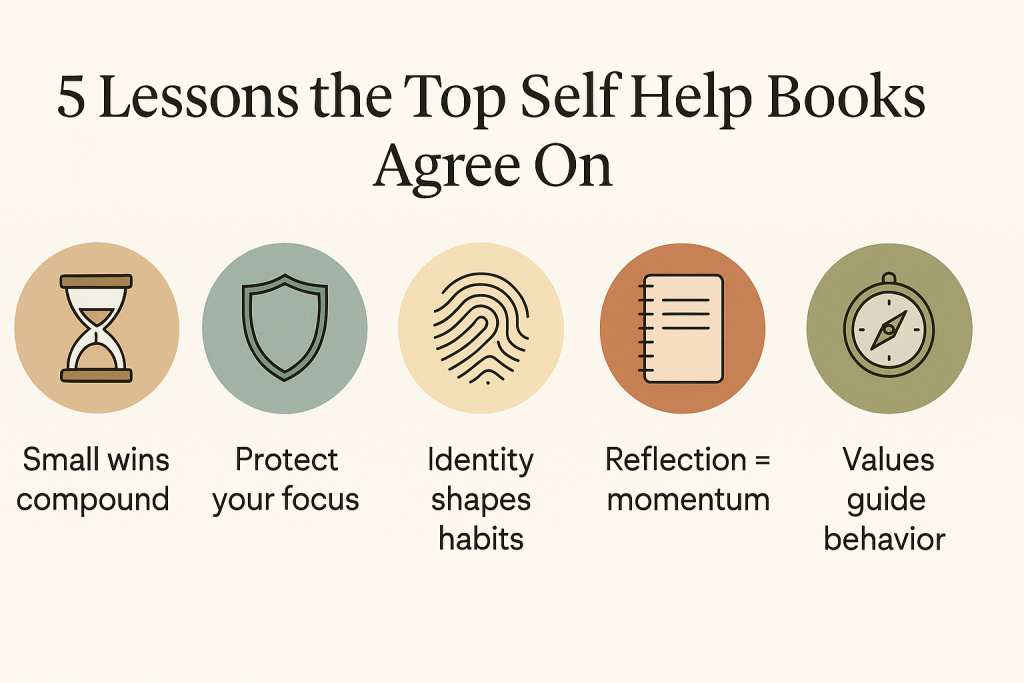
Think of habits like compound interest for your life. Tiny repeatable behaviors beat drastic, unsustainable overhauls. Choose one habit per domain (health, work, relationships). Keep it so small it feels almost silly—then celebrate it. The top self help books on habit building teach you to reduce friction and reward consistency, not perfection.
Mindset Shifts You Can Feel This Week
Growth often starts with a question: “What would this look like if it were easier?” Reframing turns stuck energy into options. Practice:
- Yet: “I’m not good at this… yet.”
- From outcome to process: Track reps, not results.
- From self-criticism to data: “What did today teach me?”
Mindset work isn’t fluffy; it’s the steering wheel for everything else.
Productivity Without Burnout
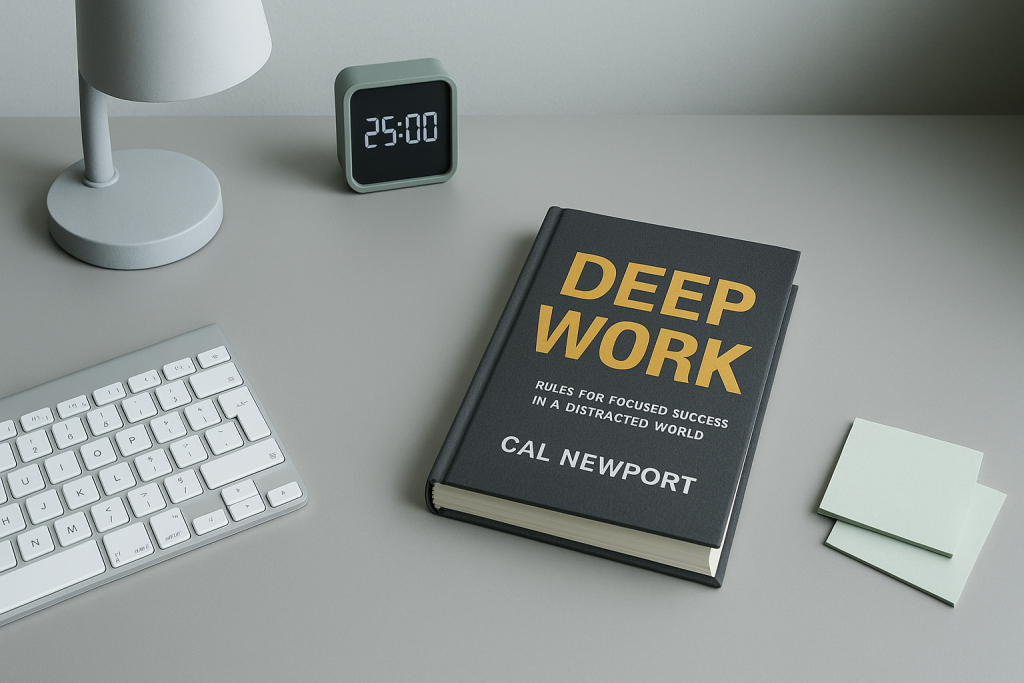
Modern productivity isn’t about doing more—it’s about protecting your best attention. Try time blocking for your one meaningful task, then bundle admin chores together. Guard deep work time like a meeting with your future self. The top self help books on productivity show you how to minimize context switching so your brain can do its best work.
Confidence & Communication You Can Practice Daily
Confidence grows when your actions match your values—especially in conversations. Use “clarify, then respond”:
- “If I’m hearing you right, what matters is X…”
- “Here’s what I propose…”
You’ll appear calm and credible while reducing misunderstandings.

Emotional Resilience & Mental Clarity
When life gets loud, two skills help almost everyone: label your emotions and create a 10-minute decompression ritual (walk, stretch, box breathing, or a page of notes). Over time, you’ll bounce back faster and ruminate less—exactly what many top self help books aim to build.
Money, Career, and Purpose
If your career feels like a moving target, zoom out: skills, reputation, leverage. Ask, “Which skill, if improved this quarter, would make everything else easier?” Then pick one book that upgrades that exact lever. Purpose often follows competence.
Relationship Skills That Strengthen Bonds
Micro-moments matter: warm greetings, honest check-ins, repaired ruptures. Treat relationships like living systems—steady maintenance beats last-minute heroics. Many personal development books teach practical scripts so you can be brave and kind at the same time.
Make It Stick With Journaling
Reading is input. Journaling is integration. After each chapter, jot:
- What resonated?
- What’s my next tiny action?
- Where can I reduce friction?
If you want an easy way to start, try these guided journaling prompts—they make reflection faster and more honest: guided journaling prompts.
🔹 Top 5 Amazon Picks: Quick Overview
Below are five widely loved titles chosen for practical utility and staying power. Each includes quick features, pros/cons, use cases, and a “review snapshot” to help you shop smarter.
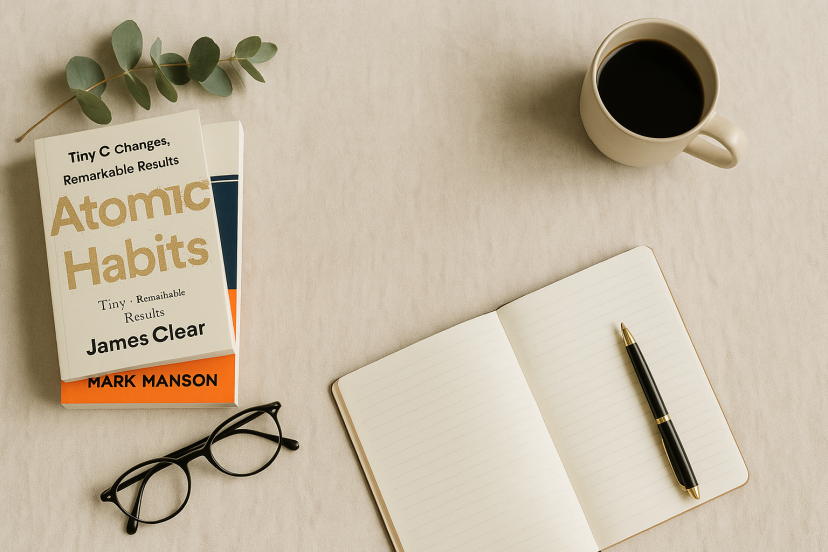
1) Atomic Habits — James Clear
Features
- Actionable habit loops (cue→craving→response→reward)
- Emphasis on identity-based change
- Clear templates to remove friction
Pros
- Simple, repeatable steps
- Works for health, work, and relationships
Cons
- May feel familiar if you’ve read habit literature
- Some readers want more depth on motivation science
Best for: Beginners and busy pros who want habit building without overwhelm.
Review snapshot: Readers praise its clarity and “one small step” approach; a few find it repetitive—yet helpful.
2) The 7 Habits of Highly Effective People (30th Anniversary Edition) — Stephen R. Covey
Features
- Values-first productivity (be proactive, begin with the end in mind)
- Personal + interpersonal effectiveness
- Added insights from Sean Covey in this edition
Pros
- Timeless frameworks
- Strong on character and relationships
Cons
- Denser reading style
- Implementation requires reflection time
Best for: Values-driven readers who want goal setting anchored in principles.
Review snapshot: Praised for depth and durability; some find it long but worth it.
3) Mindset: The New Psychology of Success — Carol S. Dweck
Features
- Fixed vs. growth mindset, with everyday examples
- Practical reframes for learning and feedback
- Updated material on “false growth mindset”
Pros
- Powerful lens you can apply anywhere
- Great for parents, teachers, and leaders
Cons
- Concept can seem simple; magic is in the practice
- Some case studies feel dated to a few readers
Best for: Anyone wanting growth mindset tools for work, school, or parenting.
Review snapshot: Loved for its clarity and confidence boost; critics want more step-by-step exercises.
4) The Subtle Art of Not Giving a F*ck — Mark Manson
Features
- Straight talk on values, boundaries, and meaning
- Humor + tough love style
- Memorable stories that stick
Pros
- Highly readable, no fluff
- Useful for confidence and decision-making
Cons
- Language and tone aren’t for everyone
- Less “how-to,” more perspective shift
Best for: Readers who want a motivation book with edge and honesty.
Review snapshot: Fans love the wake-up call; detractors want more traditional tools.
5) Deep Work — Cal Newport
Features
- System for distraction-free focus
- Practical rituals and time-blocking
- Case studies on high-quality output
Pros
- Clear blueprint for productivity without burnout
- Excellent for creatives and knowledge workers
Cons
- Requires schedule changes
- Best results with consistent boundaries
Best for: Anyone craving focused progress on meaningful projects.
Review snapshot: Praised for clarity and structure; a few want more examples for non-office jobs.
Comparison Table
| Model | Key Spec(s) | Warranty | Approx Price/Tier | Best For |
| Atomic Habits | Identity-based habits; templates; print/audio available | None (standard retailer return window) | Budget–Mid | Habit building beginners & busy pros |
| The 7 Habits | Values-first effectiveness; personal + interpersonal | None (standard retailer return window) | Mid | Principle-driven productivity & leadership |
| Mindset | Growth vs. fixed mindset; reframing feedback | None (standard retailer return window) | Budget | Students, parents, managers |
| The Subtle Art | Boundaries, meaning, tough-love motivation | None (standard retailer return window) | Budget–Mid | Straight-talk motivation & clarity |
| Deep Work | Time-blocking & focus rituals; deep work cadence | None (standard retailer return window) | Mid | Creatives, analysts, founders |
Tip: If you’re gifting or on a budget, pair Atomic Habits with a notebook; pair Mindset with sticky notes for quick reflections.
🧪 Research-Backed: Does Self-Help Actually Work?
Short answer: It can—especially when it’s structured and practiced.
- A 2021 meta-analysis of online guided self-help for college students found meaningful reductions in depressive symptoms, reinforcing that well-designed, guided self-help works when people engage with it.
- A 2024 randomized controlled trial comparing CBT-based self-help books with a placebo book and treatment-as-usual found the self-help group had significantly greater reductions in depressive scores, suggesting that evidence-grounded bibliotherapy can be a real contributor to change.
The lesson mirrors what the top self help books above do well: give you a structure, ask you to practice, and help you measure progress.
How to Read Self-Help Without Overwhelm
- One idea → one habit. Every chapter, pick one action.
- Track reps, not results. Five sessions beat a perfect plan you never start.
- Make it social. Share your weekly goal with a buddy.
- Schedule the next page. Tie reading to an existing routine (coffee, commute).
If it doesn’t fit your life right now, it’s not you—it’s a mismatch. Swap books until the voice and pacing feel right.
FAQs: Quick Answers to Common Questions
Are the top self help books worth it if I’m short on time?
Yes—pick short, action-dense titles and go micro: 10 pages or 10 minutes a day. Consistency compounds.
Which book should I start with if I struggle with follow-through?
Start with Atomic Habits for small wins. Pair it with a simple reflection routine (see the guided journaling prompts above).
What if I read a lot but nothing changes?
Shift from notes to habits. After each chapter, schedule one tiny behavior for the next 24 hours.
Can self-help books replace therapy?
They can support you, not fully replace professional care. If you’re struggling with persistent anxiety, depression, or trauma, seek licensed help.
How many books should I read this year?
Depth beats volume. Three books you apply will outperform twelve you skim.
Final Thoughts: Your Next Small Step
Here’s your gentle nudge: pick one of the top self help books above, read ten minutes today, and try one tiny action by tonight. That’s it. No dramatic reinvention—just a kinder routine that points your life where you want it to go.
You’ve got this. And I’m cheering for your next page.