
Morning Walks: The Secret To Improved Mental Health

We may earn a commission for purchases made using our links. Please see our disclosure to learn more.
You know that feeling when your brain is already “on” before you even get out of bed? Notifications, worries, errands, other people’s needs… it’s a lot. Morning Walks are one of the simplest ways to take your mind back for a few minutes—and it doesn’t require motivation levels of a superhero.
Affiliate note: If you buy through links on this page, I may earn a small commission at no extra cost to you.
In this guide, you’ll learn how to make morning walking feel easy (even if you hate mornings), how to pick the right pace, what the research says about mental health, plus a few gear picks that make walking more comfortable and consistent.
Why Morning Walks Hit Different Than “Anytime” Walks
There’s something about walking before the day grabs you by the collar. You’re not doing it after work when you’re drained, or in between tasks when your brain is still buzzing. You’re doing it when the slate is still clean.
Morning Walks work so well because they do three things at once:
- They move your body (which shifts your nervous system out of “stuck” mode).
- They give your mind space (no meetings, no pressure to perform).
- They create a tiny win you can feel proud of before breakfast.
And honestly? That early win changes your whole tone for the day. You start thinking, “Okay. I can do hard things.”
The Mood “Reset Button” You Can Feel in Your Body
Some benefits of physical activity show up fast—like reduced short-term anxiety and a calmer mood.
A morning walk can feel like you gently turned the volume down on your stress. Not because life suddenly got easy… but because your body got a chance to process the pressure instead of storing it in your shoulders and jaw all day.
A quick self-check
While walking, ask yourself:
- “Is my breathing softer than it was 5 minutes ago?”
- “Are my thoughts less sharp-edged?”
- “Do I feel a little more here?”
“Yes, even a little” is a sign of development. That’s your nervous system learning a new rhythm.
Morning Light: The Mood Booster You Can’t Bottle
This is the underrated magic: morning light helps anchor your internal clock, which can support energy, sleep timing, and mood.
And you don’t need an intense sunrise hike. Even a regular neighborhood walk gets you outside, which is the point. You’re basically telling your brain, “Hey, it’s daytime. Let’s wake up cleanly.”
That matters because sleep and mood are best friends. When one gets messy, the other usually follows.
If you’ve been feeling “off,” try this for a week: walk outside within the first 1–2 hours of waking. Keep it simple. Let the light do its thing.

Stress Relief Without the Pep Talk
You don’t need to “think positive” while walking. You can be annoyed. You can be tired. You can even be dramatic in your head. (I support it.)
The secret is that walking gives your body a way to complete stress. Similar to the act of releasing gas from a pressure cooker.
Try the “shoulder drop” trick
Every few minutes:
- Inhale normally
- Exhale and drop your shoulders on purpose
- Unclench your hands
- Keep walking
It’s small, but it tells your body: we’re safe enough to soften.
Better Sleep Starts With Your First Step
If your sleep is weird—waking up too early, tossing at night, feeling tired but wired—Morning Walks can help. Regular physical activity supports better sleep, and even short sessions can make a difference.
Also, walking early helps you build a daily rhythm: wake → move → light → eat → focus → rest. Your body loves patterns like that.
The simple goal
If you’re starting from scratch:
- 10 minutes in the morning for 7 days
That’s it. Don’t negotiate with it. Just do the 10.
A Morning Walk Routine That Fits Real Life
Let’s be real: some mornings are chaos. Kids, work, prayer time, caregiving, traffic, deadlines—life doesn’t politely pause so you can “romanticize wellness.”
So build a routine that flexes.
Pick one of these “real-life” formats
- The Quiet Walk (solo): no phone, just you and your thoughts
- The Errand Walk: park farther, walk to grab one thing
- The Family Walk: stroller, hand-holding, slow pace
- The “I’m Late” Walk: 7 minutes counts—still a win
Consistency beats perfection every time.
Stay Comfortable and Safe: Shoes, Visibility, and Weather
If walking feels uncomfortable, you won’t keep doing it. Simple.
Comfort basics
- Wear shoes that don’t pinch or flop (your knees will thank you)
- Choose socks that don’t slide (blisters are motivation killers)
- Dress in layers so you can adjust
Safety basics
If it’s dark, foggy, or you’re near traffic:
- wear reflective gear or a light
- avoid headphones that block everything
- let someone know your route
This isn’t fear-based—it’s self-respect.
Warm-Up Tricks for Stiff Mornings
Morning stiffness is normal, especially if you sit a lot, sleep tense, or have older joints. Start gently.
60-second warm-up (before you walk)
- 10 ankle circles each side
- 10 slow calf raises
- 5 hip circles each direction
- 3 deep breaths with shoulder rolls
Then start walking slow for the first 2 minutes. Your body will “wake up” as you go.
How Long Should Morning Walks Be?
Here’s the truth: the best duration is the one you’ll repeat.
The World Health Organization says that people should try to be moderately active for 150 to 300 minutes a week.
That sounds big until you break it down:
- 30 minutes × 5 days = 150 minutes
- or 15 minutes × 10 days (okay yes, math is rude, but you get it)
Quick guide by goal
- Mental reset: 10–20 minutes
- Energy + stamina: 20–40 minutes
- Weight goals: start at 20 minutes and build gradually (don’t punish yourself)
Brisk vs Easy: Choosing the Right Pace
You don’t have to power-walk like you’re late for a flight.
Easy pace is perfect if:
- you’re new to walking
- you’re recovering from stress/burnout
- your goal is consistency and mood
Brisk pace helps if:
- you want cardio benefits
- you like feeling challenged
- you’re building fitness
A simple way to check:
- Easy pace: you can sing a little
- Brisk pace: you can talk, but you’d rather not
Mixing both is usually the sweet spot.
Make It Stick Without Relying on Motivation
Motivation is flaky. It shows up when it wants, like a cat.
So instead, make Morning Walks automatic:
Tiny habit rules that actually work
- Attach it to something you already do (after brushing teeth, after morning prayer, after coffee)
- Leave your shoes where you’ll trip over them
- Use the “only 5 minutes” rule (you can always stop… but you rarely do)
And if you miss a day? No guilt spiral. You just restart. That’s the skill.
Walking for Weight Loss, Heart Health, and Energy (No Hype)
Walking supports weight management, cardiovascular health, and daily function—especially when you do it consistently.
But let’s set expectations like an honest friend:
- Walking won’t “fix everything” in 3 days.
- It will make you feel more energized over time.
- It will support healthier habits because your brain feels calmer.
Also, the CDC notes that stepping more each day is linked with lower risk of premature death, and mentions step ranges where benefits level off in one study.
So yes—your morning walk counts, even if it’s not a marathon moment.
Product Picks for Morning Walks
These are practical, low-drama items that make walking easier to start—and easier to keep doing.
1) Fitbit Inspire 3 Health & Fitness Tracker
Short description: Lightweight tracker for steps, heart rate, and sleep—great for staying consistent.
Features: step tracking, 24/7 heart rate, sleep tracking, long battery life
Best for: beginners who like simple progress, busy people who want “set it and forget it”
2) SHOKZ OpenRun Pro Mini (Bone Conduction Headphones)
Short description: Lets you listen while keeping ears open for safety—perfect for outdoor walking.
Features: open-ear design, secure fit, sweat resistance
Best for: early walkers, parents, anyone who wants awareness + audio
3) Hydro Flask Wide Mouth Bottle (Flex Straw Cap, 32 oz)
Short description: Cold water stays cold; easy sipping mid-walk.
Features: insulation, durable build, straw cap convenience
Best for: hot climates, longer walks, people who forget hydration
4) Fitgriff Running Belt (phone/keys/ID)
Short description: Keeps your essentials close without bulky pockets.
Features: stretchy fit, secure storage, reflective elements (varies by model)
Best for: walkers who hate holding stuff, commuters, travelers
5) Noxgear Tracer2 Reflective Vest
Short description: Visibility gear that helps drivers see you early.
Features: high-visibility design, adjustable fit, great for low light
Best for: dawn walkers, roadside routes, safety-first routines
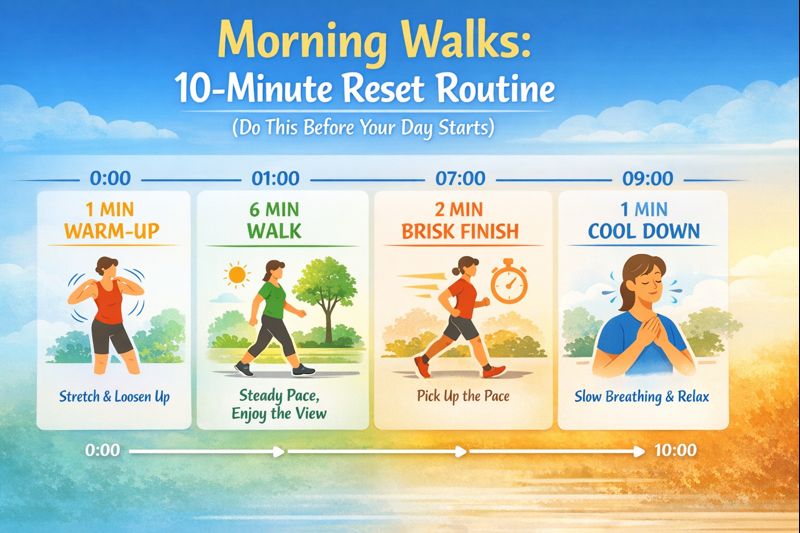
🧪 Research-Backed Proof: Morning Walks and Mental Health
Here’s the good news: this isn’t just “wellness talk.” Research keeps backing up what walkers feel in real life—moving more is linked to better mental health.
Study #1: More daily steps, fewer depressive symptoms
A 2024 review in JAMA Network Open found that higher daily step counts were associated with fewer depressive symptoms across observational studies. Here’s the source: daily step counts and depression.
What this means for you: You don’t need a perfect workout plan. A steady walking habit—especially one you can repeat—can be a real support tool for your mood.
Study #2: Physical activity helps protect against depression over time
A 2018 meta-analysis looked at physical activity and the risk of developing depression and concluded that activity can offer protective benefits across ages and regions. Source: physical activity and incident depression meta-analysis.
What this means for you: Morning Walks aren’t just “a nice idea.” They’re a practical prevention habit—like brushing your teeth, but for your mental state.
And if you want an official “doable target,” the Centers for Disease Control and Prevention highlights that even one session can support brain health (including reduced short-term anxiety), and regular activity can reduce risk of depression and anxiety.
Morning Walks FAQ + Conclusion: The Secret Is Showing Up
How early should I do Morning Walks?
Whenever you can consistently pull it off. If possible, aim for within the first 1–2 hours after waking so it becomes part of your morning rhythm.
Is it better to go for walks in the morning or at night?
Not “better,” just different. Morning walks can feel more calming and help set your day’s tone, while evening walks can help you decompress. Pick what you’ll repeat.
How long does it take to notice mental health benefits?
On the same day, certain people feel more at ease. For steadier mood shifts, give it 2–4 weeks of consistency (most days), and keep the goal simple.
What if I can only walk 5–10 minutes?
That still counts. Five minutes is a habit. Ten minutes is momentum. Don’t underestimate small walks—they’re how the routine becomes real.
Does going for a walk in the morning help you lose weight?
They can, especially when paired with consistent sleep and food choices. Start with 15–20 minutes and build up gradually so it stays sustainable.
Conclusion: Make Morning Walks your daily anchor
If you want one habit that improves your day without demanding a total personality change, this is it. Start small. Walk imperfectly. Keep showing up. Your mind doesn’t need a dramatic transformation—it usually just needs a little space and movement, every morning.
And if you’d like a simple way to track your steps and stay consistent, check out the Vital Fitness Tracker for daily walking progress.