Best Toys to Reduce Stress at Home or Work
We may earn a commission for purchases made using our links. Please see our disclosure to learn more.
Some stress is loud. You know, the heart-racing, jaw-clenching kind.
Other stress is sneakier. It looks like checking your phone every three minutes, bouncing your leg under the desk, snapping at your partner over nothing, or staring at a tiny task like it personally offended you.
That is where toys to reduce stress can help.
Not because a fidget cube is magic. Not because a squishy ball will solve your inbox. But because sometimes your brain needs a small, physical off-ramp. A way to release pressure before you spiral, doom-scroll, or eat your feelings straight out of the pantry.
In this guide, you’ll learn which types of stress toys actually make sense, how to choose one that fits your habits, and which Amazon picks are worth a look. You’ll also see what research says, where these tools fit into self-improvement, and when they are helpful versus just another thing cluttering your desk.
Affiliate note: This article may include product suggestions, which means I may earn a small commission at no extra cost to you.
Why stress sneaks into everything
Stress is not always dramatic. Sometimes it is just constant friction.
You feel it in your shoulders. In your focus. In the way simple decisions suddenly feel like algebra. The World Health Organization notes that poor working environments, excessive workloads, and low job control can harm mental health, and it estimates that depression and anxiety cost about 12 billion working days globally each year.
So no, you are not “bad at life” because your brain feels fried by 2 p.m.
You are human.
And humans often regulate stress better when the body has something simple, repetitive, and safe to do.
Do toys to reduce stress really help?
Yes, sometimes. But let’s keep it real.
Stress toys are not treatment. They are tools.
Think of them like chewing gum for your hands. They can help take the edge off, redirect restless energy, and make it easier to stay present. That can be especially useful when you are working, studying, commuting, or trying not to lose your cool in a waiting room.
The key is matching the toy to the moment. A loud clicky gadget might help at home but annoy everyone at work. A silent roller or squeeze toy, on the other hand, can feel like a tiny pressure valve.
How sensory stress toys work
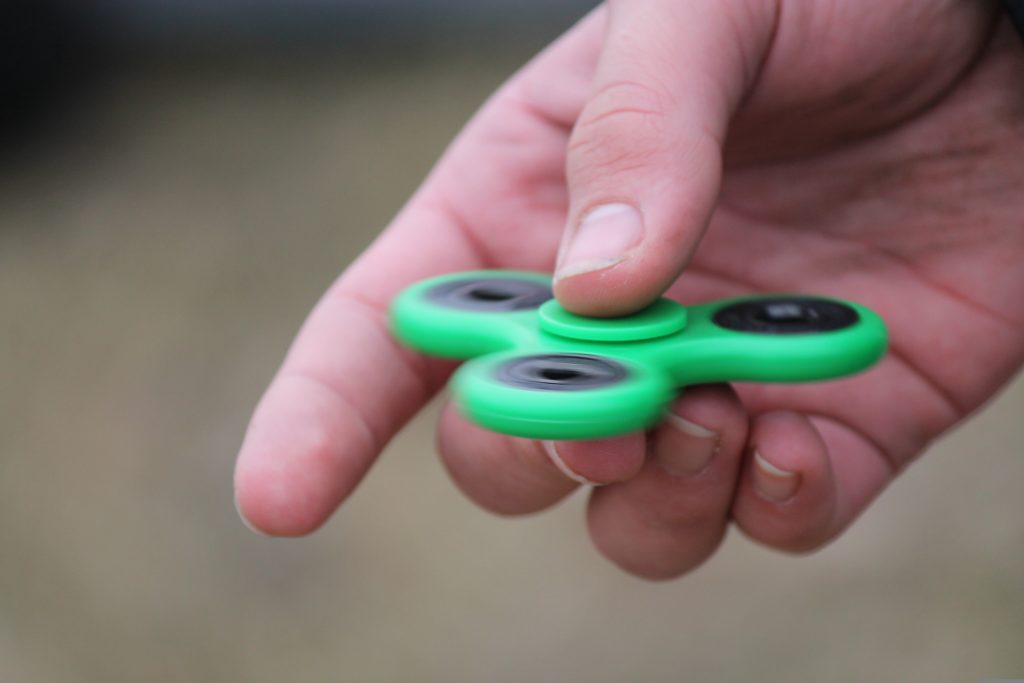
Most stress toys help in one of three ways:
They give restless energy somewhere to go
Your mind says, “Calm down.” Your body says, “Absolutely not.” A fidget toy bridges that gap.
They create a predictable sensory loop
Rolling, squeezing, stretching, and clicking are repetitive. Repetition can feel grounding when your thoughts are all over the place.
They interrupt autopilot stress habits
Sometimes the real win is not the toy itself. It is what the toy replaces.
Nail biting. Skin picking. Mindless scrolling. Angry pen clicking. Sending that email you should absolutely wait ten more minutes to send.
Best types of toys to reduce stress
Not every stress toy fits every personality.
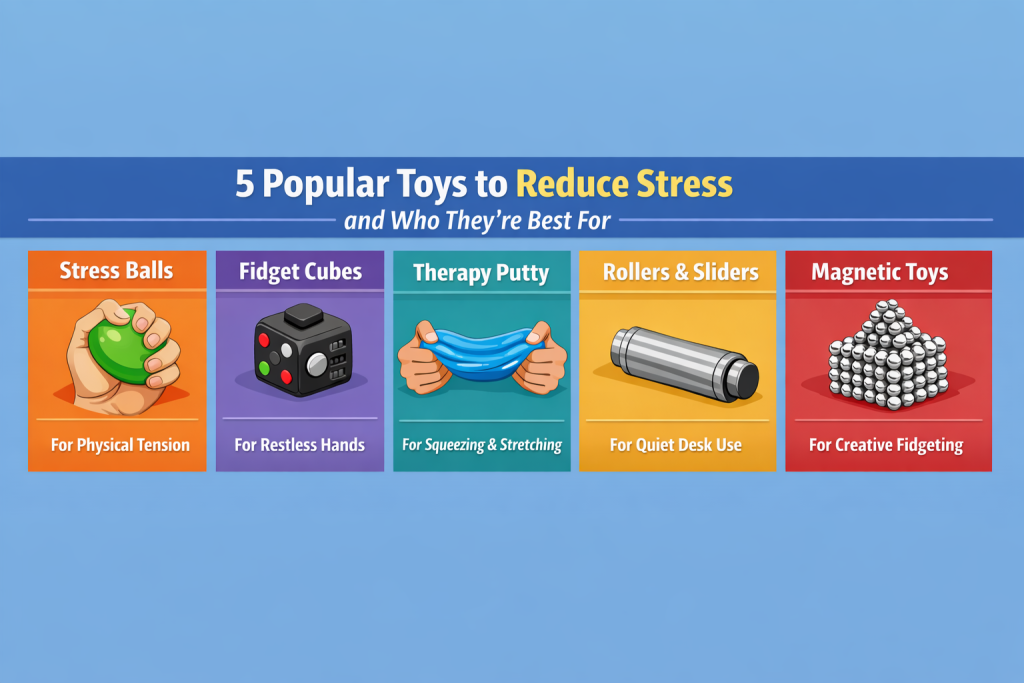
Here is the quick cheat sheet:
- Squeeze toys: Great when stress feels physical and bottled up
- Rollers and sliders: Best for quiet focus at a desk
- Fidget cubes: Good for people who get bored easily
- Therapy putty: Helpful when you want both stress relief and hand engagement
- Textured sensory toys: Nice for calming tactile input
- Magnetic desk toys: Best for adults who like hands-on, creative fiddling
If you get overstimulated easily, go for something soft and quiet. If you tend to zone out, choose something that keeps your hands busy without hijacking your attention.
How to choose the right stress toy
A good stress toy should fit your life, not become one more thing you feel guilty for not using.
Ask yourself:
Do you need quiet or sensory feedback?
For work meetings, a silent toy is gold. For home use, you can get away with something more tactile or clicky.
Do you like squeezing, rolling, or building?
Some people relax by compressing. Others like motion. Others want a mini puzzle.
Are you stressed, restless, or both?
If your stress feels like tight muscles and pent-up tension, try squeeze toys. If it feels like mental static, a smooth rolling or flipping toy may work better.
This is a little like picking workout shoes. The “best” one is the one you will actually use.
Best toys to reduce stress at home or work
These Amazon US picks cover different stress styles, from quiet desk fidgeting to stronger hand-based relief.
ONO Roller – Handheld Fidget Toy for Adults
Short description: A sleek, quiet roller made for adults who want something subtle and satisfying.
Features: Amazon’s listing highlights its near-silent rolling motion, compact portable design, and aircraft-grade aluminum build.
Who it’s for: Best for office workers, students, and anyone who wants a stress tool that does not scream “I brought a toy to this meeting.”
PILPOC theFube Fidget Cube
Short description: A foldable cube with continuous motion that feels oddly soothing.
Features: The Amazon listing describes eight small cubes connected by metal hinges for an endless cubing experience and calming sensory stimulation.
Who it’s for: Great for people who like movement and structure, especially if squeezing does not do much for them.
Tangle Therapy Relax
Short description: A twistable sensory toy that feels more like a hand-calming loop than a gimmick.
Features: Amazon describes it as ergonomic, tactile, and calming, with a design aimed at hand therapy and restless hands.
Who it’s for: A smart pick for people who like repetitive motion and a softer, more flexible feel.
Schylling NeeDoh Nice Cube
Short description: A squishy cube that is simple, satisfying, and weirdly hard to put down.
Features: Amazon’s listing says it feels soft when squeezed slowly and firmer with faster pressure, with a compact 2.25-inch cube shape.
Who it’s for: Perfect for people who carry stress in their body and want something physical to squeeze.
Speks Original Crags Ferrite Putty
Short description: A tin of magnetic ferrite stones you can mash, stack, and reshape.
Features: Amazon says the stones are heavy-duty, durable, and designed for long-lasting stress relief without messy residue.
Who it’s for: Best for adults who like tactile desk toys and want something a little more creative than a basic stress ball.
What research says about tactile stress relief
This part matters because vibes are nice, but evidence is nicer.
A 2025 mood shifter ball intervention study followed 332 nurses over four weeks. Stress scores dropped from 25.6 to 19.4, and burnout scores also fell after regular use of handheld emoji balls paired with deep breathing. That does not prove every stress toy works for every person, but it does suggest that simple tactile tools can support stress regulation when used consistently and intentionally.
A 2024 randomized controlled trial on stress ball use during angiography found that using a stress ball was associated with lower anxiety and pain levels in patients during the procedure. Again, context matters. A hospital is not your home office. Still, the basic idea holds up: giving the hands something purposeful to do can reduce tension in stressful moments.
My honest take? The research supports stress toys as helpful sidekicks, not miracle workers.
How to use stress toys without getting distracted
This is where people get tripped up.
A stress toy should lower friction, not become the main event.
Keep it in your peripheral routine
Use it while reading, listening, waiting, or thinking. If you stop doing the task and start performing for the toy, you picked the wrong one.
Match the tool to the setting
At work, choose quiet. At home, you have more freedom.
Pair it with a reset cue
Try this:
- 5 slow breaths
- one minute of squeezing or rolling
- back to the task
That small ritual teaches your brain, “We are calming down now.”
Best times to use a stress toy
You do not need to wait until you are fully frazzled.
Stress toys can work best:
- before a meeting you are dreading
- during deep-focus work when your body feels twitchy
- while commuting
- during phone calls
- before sleep if your mind is busy
- after a tough conversation when your body still feels activated
Basically, use them when your nervous system is revving a little too high, not only after it has already set the kitchen on fire.
Build a calm desk or nightstand setup
A good stress toy works even better when it lives in the right environment.
Try a tiny “calm zone” with:
- one stress toy
- water nearby
- a sticky note with a grounding phrase
- headphones or soft background sound
- a notepad for brain-dump thoughts
Keep it simple. You are building a landing pad, not curating a wellness museum.
Toys to reduce stress for different personalities
Different people calm down in different ways.
For the overthinker
Try a smooth roller or silent cube. Something repetitive but low-stimulation.
For the physically tense person
Go for squeeze toys or therapy putty. Your body wants release.
For the creative fidgeter
Magnetic stones or shape-shifting toys can feel satisfying without being childish.
For the easily overstimulated
Choose soft textures, muted colors, and quiet movement.
There is no gold medal for using the trendiest option. Pick the one your nervous system says yes to.
Mistakes to avoid when buying stress toys
A few common mistakes can make a decent tool useless.
Buying the loudest thing on the page
Fun for five minutes. Socially risky for eight hours.
Choosing novelty over comfort
If it looks cool but feels annoying, it will end up in a drawer.
Expecting instant emotional transformation
A stress toy can support calm. It usually will not create it out of thin air.
Buying five before testing one
You are building a habit, not adopting a tiny silicone family.
When a stress toy is not enough
Sometimes stress is bigger than a fidget fix.
If you are constantly overwhelmed, not sleeping, snapping at everyone, or feeling stuck in anxiety, zoom out. A toy can help regulate a moment, but it cannot solve chronic overload, burnout, trauma, or depression.
That is where bigger supports matter:
- better boundaries
- more rest
- therapy or counseling
- movement
- fewer open tabs in your life and your browser
No shame there. Sometimes self-improvement starts with admitting the tool is too small for the job.
Turn the habit into self improvement
This is the part people miss.
Using toys to reduce stress is not just about feeling calmer for five minutes. It can become part of a bigger self-improvement system. A small reset can help you respond instead of react. It can help you stay in the room, finish the task, or speak more gently when you are already running hot.
If you want to make that progress visible, pair your stress-relief habit with simple reflection. For example, you can track when you use a toy, how stressed you felt before, and whether it actually helped. A tool like these progress tracking tools for personal growth can make that process feel less fuzzy and more encouraging.
Tiny pattern. Tiny win. Bigger change.
What to remember before you buy
You do not need the fanciest gadget.
You need the one that feels natural in your hand, fits your setting, and helps you pause instead of spiral. That is it.
The best toys to reduce stress are practical, low-pressure, and easy to reach for in real life. Not perfect life. Real life. Messy desk. Busy brain. Too many tabs open. That life.
FAQs
What are the best toys to reduce stress for adults?
The best options for adults are usually quiet, discreet, and durable. Good picks include silent rollers, fidget cubes, squeeze toys, therapy putty, and magnetic desk toys.
Can toys to reduce stress really help in the workplace?
Yes, they can help at work, especially if they are quiet and low-distraction. The goal is to reduce restless energy while keeping your attention on the task.
Are fidget toys good for anxiety or just boredom?
They can help with both, but mainly as short-term support. They may reduce physical tension and provide grounding, though they are not a substitute for mental health care.
Which stress toy is best for focus?
Rollers, cubes, and subtle tactile toys usually work best for focus because they keep your hands busy without demanding too much visual attention.
How do I know if a stress toy is right for me?
If it feels comfortable, easy to use, and helps you calm down without distracting you, it is probably a good fit. If it annoys you, makes noise, or pulls you off-task, skip it.