
5 Signs You Need Healing From Emotional Exhaustion

We may earn a commission for purchases made using our links. Please see our disclosure to learn more.
You can keep functioning long after you stop feeling like yourself. You may still answer messages, meet deadlines, care for others, and handle the basics, yet everything costs more energy than it used to. Healing From Emotional Exhaustion begins with noticing that shift instead of pushing through it. Ongoing strain can affect mood, concentration, sleep, motivation, and recovery. This guide covers five common signs, practical ways to reduce overload, research-backed strategies, and supportive tools. The goal is to help you recognize when your usual coping habits are no longer enough.
What Emotional Exhaustion Really Feels Like
Emotional exhaustion means feeling mentally and emotionally drained after stress or demanding circumstances continue for an extended period. It can affect mood, energy, relationships, concentration, and everyday habits.
Pressure may come from work, caregiving, grief, finances, parenting, relationships, or several problems at once. Healing From Emotional Exhaustion matters when normal downtime stops feeling restorative.
The World Health Organization classifies burnout as a work-related phenomenon that can result from ongoing workplace stress. Emotional exhaustion can also come from pressures elsewhere in life.
Sign 1: Rest No Longer Restores You
You sleep longer or finally reach the weekend, yet you still feel depleted.
Fatigue alone does not prove emotional exhaustion. Poor sleep, illness, medications, and demanding schedules can also contribute. However, tiredness combined with irritability, low motivation, poor concentration, or feeling overwhelmed deserves attention.
During Healing From Emotional Exhaustion, you may need fewer demands as well as more rest. If the same stressors refill your schedule, downtime may only help temporarily.
Sign 2: Small Demands Feel Disproportionately Heavy
A short email feels like a project. Choosing dinner becomes irritating. A minor change of plans makes you want to withdraw.
When mental bandwidth is crowded, ordinary decisions can feel difficult. You may postpone simple tasks or avoid responsibilities you normally handle easily.
Ask, “What has been taking most of my capacity lately?” During Healing From Emotional Exhaustion, curiosity can help identify the workload, expectations, relationships, or habits draining you.

Sign 3: You Feel Numb, Irritable, or Detached
Emotional exhaustion does not always look like sadness. Sometimes it looks like caring less.
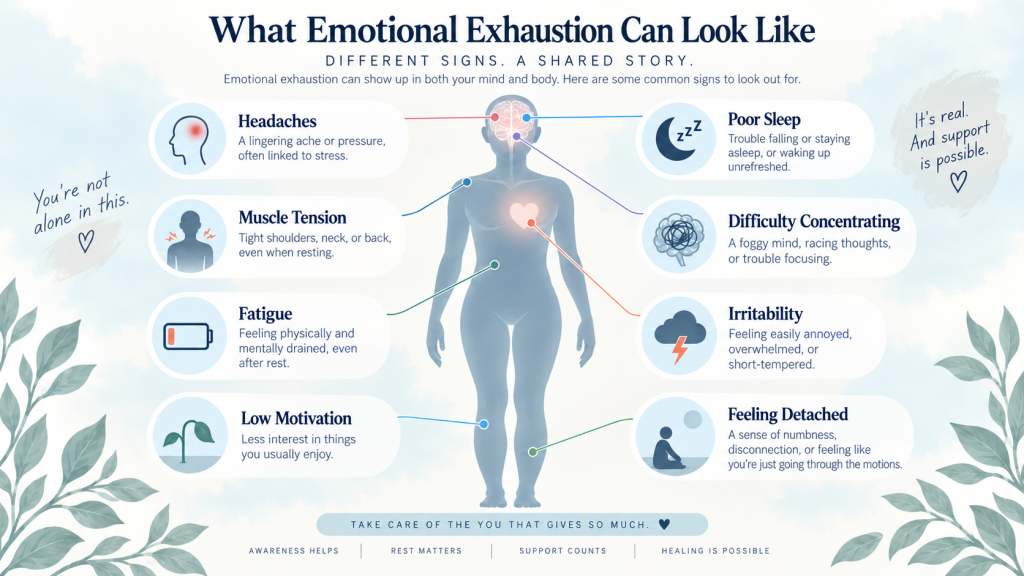
You may feel flat during activities you enjoy, impatient with people you care about, or detached from responsibilities that once mattered. Mayo Clinic Health System’s guidance on emotional exhaustion includes signs such as apathy, irritability, anxiety, hopelessness, negative thinking, and feeling powerless.
One symptom does not confirm the cause, but persistent changes are worth noticing.
Sign 4: Focus and Motivation Keep Slipping
You reread the same paragraph, forget small tasks, or start things without finishing them. Motivation may also drop even when the work matters.
Difficulty concentrating has many possible causes, so emotional exhaustion should not be assumed automatically. Still, prolonged stress can make everyday thinking harder.
During Healing From Emotional Exhaustion, simplify the day. Write tasks down, reduce unnecessary decisions, and choose one meaningful priority instead of an ambitious list.
Sign 5: Stress Is Showing Up in Your Body
Stress may also appear physically. Mayo Clinic Health System notes that emotional exhaustion can occur alongside fatigue, headaches, poor sleep, muscle tension, appetite changes, and nausea.
Because these symptoms have many possible causes, persistent or severe physical symptoms deserve medical attention rather than automatically being blamed on stress.
Notice whether high-pressure periods affect sleep, appetite, or muscle tension. Healing From Emotional Exhaustion should include food, rest, movement, and appropriate healthcare.
Why a Weekend Off May Not Be Enough for Healing From Emotional Exhaustion
A quiet weekend can help, but two slower days may not undo months of overload.
If Monday brings the same workload, constant notifications, caregiving pressure, or blurred boundaries, recovery disappears quickly.
That is why Healing From Emotional Exhaustion may require fewer commitments, clearer limits, practical help, or different expectations. Rest works best when paired with reduced pressure.

Start Healing by Reducing the Load, Not Optimizing Yourself
When you are depleted, self-improvement can become another assignment.
Before adding a complicated routine, ask what can stop, shrink, wait, move, or be shared. Cancel one optional commitment or delay a low-priority project.
If productivity pressure contributes to the problem, this guide on how to be more productive without burning out can help you focus on meaningful progress without treating every available hour as work time.
Healing From Emotional Exhaustion becomes more realistic when your plan respects your current capacity. The first goal is breathing room, not better performance.
Rebuild Your Capacity Through Sleep, Movement, and Quiet
Exhaustion often pushes basic routines aside, yet those basics support recovery.
Aim for a reasonably consistent sleep schedule, regular meals, manageable movement, and short periods without incoming demands.
A 2026 CDC data brief on sleep among U.S. adults, using 2024 survey data, reported that 30.5% of adults averaged fewer than seven hours of sleep in a 24-hour period.
Sleep alone does not fix emotional exhaustion, but insufficient sleep can make recovery harder. Choose gentle consistency: a short walk, earlier phone cutoff, or ten quiet minutes.
Use Boundaries That Protect Your Remaining Energy
A useful boundary changes what happens. “I need less stress” describes a problem; “I will not answer nonurgent work messages after 7 p.m.” creates a limit.
Look for recurring energy leaks, such as solving everyone’s problems or accepting plans before checking your energy.
Choose one boundary you can maintain. Healing From Emotional Exhaustion becomes harder when every hour intended for recovery stays available for someone else to claim.
Research-Backed Strategies for Healing From Emotional Exhaustion
Research does not identify one universal treatment for emotional exhaustion. Much of the evidence focuses on burnout, stress, mindfulness, or broader psychological distress, so findings require careful interpretation.
A 2024 systematic review of 49 randomized controlled trials on mindfulness programs and burnout found that 67% reported a significant benefit on at least one burnout indicator, with emotional exhaustion most often affected. Many participants were healthcare workers, which limits generalization.
A 2023 meta-analysis of expressive writing studies covering 31 studies and 4,012 participants found a small but statistically significant delayed effect on depression, anxiety, and stress symptoms. Journaling may therefore be useful as support, not a standalone treatment.
According to the World Health Organization, burnout is characterized by exhaustion, growing detachment or cynicism toward work, and a decline in professional effectiveness.
For Healing From Emotional Exhaustion, combine supportive habits with reduced stressors, adequate rest, social support, and professional care when symptoms persist.
Recommended Products for Healing From Emotional Exhaustion
Products cannot fix emotional exhaustion, but a useful tool can make a supportive habit easier to maintain.
Intelligent Change The Five Minute Journal – Original Daily Gratitude Journal for Women & Men – Mindfulness, Happiness & Daily Reflection – Undated Planner – Affirmation Journal – Gifts for Women
Best for: People who want structured reflection without long journaling sessions
This undated journal uses short morning and evening prompts around gratitude, intentions, affirmations, daily highlights, and reflection. The fixed format can make writing easier when an empty page feels like work. It suits brief check-ins during Healing From Emotional Exhaustion, though free-form journalers may prefer a plain notebook.
Adaptive Sound Technologies LectroFan EVO Sound Machine, White
Best for: People whose rest is disrupted by inconsistent background noise
The LectroFan EVO offers electronic fan and noise sounds plus a sleep timer, creating steady background sound when outside noise makes settling difficult. Its compact design suits smaller spaces and travel. People who rest best in silence may not need a sound machine.
MZOO Luxury Sleep Mask for Women Men Patented Light Blocking Design | Zero Eye Pressure, 3D Contoured Sleeping Mask for Side Sleeper, Breathable, Adjustable, for Travel, Black
Best for: Light-sensitive sleepers and people resting in bright spaces
This adjustable mask uses a contoured design that leaves space around the eyes while reducing surrounding light. It can suit naps, travel, or bright bedrooms where blackout curtains are impractical. Fit is personal, so facial shape, strap preference, and sleeping position can affect comfort.
Hugger Mugger Zafu Meditation Cushion – Support in Cross-Legged Sitting, Buckwheat filled, Durable Fabric, Convenient Handle, Handmade in USA
Best for: People building a seated mindfulness or breathing routine
This zafu uses adjustable buckwheat hull filling, allowing users to change cushion height for their preferred seated position. A carrying handle makes it easier to move. It can make floor sitting more practical, although a supportive chair may be preferable if sitting on the floor feels uncomfortable.
Loop Quiet 2 Ear Plugs – Ultra-Comfy Reusable Hearing Protection for Sleep
Best for: Noise-sensitive readers who want a compact reusable option
Loop Quiet 2 earplugs provide reusable noise reduction and include multiple ear-tip sizes for fit. They can be useful during rest, travel, reading, or quiet periods. They reduce rather than eliminate sound, so consider whether you need to hear alarms or other important cues.
When Self-Care Is Not Enough
Routine changes can help, but sometimes you need more support than a routine provides.
If exhaustion continues, worsens, or significantly interferes with work, relationships, sleep, or everyday responsibilities, consider speaking with a doctor or licensed mental health professional.
A clinician can help determine whether prolonged stress is the main issue or another condition may be contributing. Healing From Emotional Exhaustion may include therapy, medical evaluation, workplace changes, social support, or practical help. If you cannot stay safe, seek emergency help immediately.
FAQs About Healing From Emotional Exhaustion
How long does Healing From Emotional Exhaustion take?
There is no universal timeline. Recovery depends on how long the strain has lasted, whether major stressors can change, your health, available support, and the recovery time you can protect. Look for gradual improvements in sleep, concentration, irritability, emotional capacity, and daily functioning rather than expecting a fixed number of days or weeks.
Is emotional exhaustion different from burnout?
Not exactly. Emotional exhaustion can come from work, caregiving, relationships, finances, grief, or other prolonged pressures. The World Health Organization defines burnout as a work-related condition associated with chronic workplace stress that has not been effectively managed. Emotional exhaustion can be part of burnout, but not every case is occupational burnout.
Can sleep fix emotional exhaustion?
Sleep can support recovery, especially if you have consistently been underslept, but it does not remove the source of exhaustion. If workload, caregiving pressure, constant availability, or relationship stress stays unchanged, depletion may return. Protect sleep while also reducing avoidable demands and asking for practical help when possible.
Should I take time off work?
Time off may help when work is a major source of strain and leave is available. However, consider what will change after the break. If you return to the same unsustainable conditions, longer-term workload adjustments, clearer boundaries, or support from an appropriate manager or clinician may also be useful.
What is the first step in Healing From Emotional Exhaustion?
Identify the biggest repeating drain and choose one demand you can reduce this week. Then protect one recovery habit such as sleep, regular meals, movement, quiet time, or supportive conversation. If symptoms persist, feel severe, or significantly interfere with daily functioning, make professional support part of your plan.
Conclusion: A Practical Path to Healing From Emotional Exhaustion
Healing From Emotional Exhaustion is less about becoming tougher and more about changing the balance between demand and recovery. Notice when rest stops restoring you, ordinary tasks feel unusually heavy, irritability or numbness grows, concentration slips, or stress affects your body. Reduce avoidable pressure, protect sleep and quiet, establish one workable boundary, and seek professional help when symptoms persist or disrupt daily life. The Five Minute Journal can support brief reflection, while the LectroFan EVO may help create steadier background sound in a noisy environment. Start with the pressure point costing you the most energy, make one realistic change, and build from there.