
Top 10 Goal-Setting Card Decks
We may earn a commission for purchases made using our links. Please see our disclosure to learn more.
Goal-Setting Card Decks turn vague intentions into prompts you can sort, discuss, write on, or revisit. They suit solo planners, coaches, teams, students, and people who prefer bite-sized reflection over full workbooks. The right deck can clarify priorities, connect goals to values, or translate ambition into action. I compared these picks for goal relevance, prompt structure, usability, portability, build, value, and the space each deck needs in regular use, while checking Amazon.com pages and supporting brand information. Some focus on execution; others help you decide which goals deserve pursuit.
Goal-Setting Card Decks Comparison Table
| Product | Best for | Key feature | Main limitation | Price category | Overall recommendation |
| Mind Design Planner Cards | Daily execution | Goal plus checklist cards | Write-on format | Budget | Best value |
| Values Vault | Values-based goals | 208 values | Large deck | Mid-range | Best overall |
| IKIGAIN Ikigai Cards | Purpose | 35 questions | Little task tracking | Budget | Beginner-friendly |
| Live Your Values | Values practice | 78 cards plus guide | Indirect execution | Mid-range | Strong reflection |
| metaFox Dreamland | Visualization | Image-question prompts | Loose structure | Mid-range | Creative pick |
| metaFox Life Design | Life decisions | 52 visual prompts | Broad focus | Mid-range | Thoughtful planning |
| What Really Matters! | Coaching | 80 value cards | Premium positioning | Premium | Deep values work |
| Holstee Reflection Cards | Portable reflection | 104 questions | No task system | Mid-range | Conversation-friendly |
| Know Yourself | Self-knowledge | 60 prompts | Pre-goal focus | Mid-range | Easy starting point |
| Mind Of A Champion | Action motivation | Affirmations plus actions | Men-focused branding | Mid-range | Specialized pick |
1. Mind Design Daily Planner To-Do List Notepad for ADHD Focus, Planner Cards Only | Checklist & Goal Cards for Organizing Priorities, Routines & Daily Tasks — Best for Daily Execution
Overview: This system connects goal planning with daily tasks.
Key Features: 70 double-sided cards; 60 checklist cards plus 10 goal cards; compact 3-by-5-inch format.
Pros: Portable and action-focused.
Cons: Write-on cards are less reusable than laminated prompts.
Best For: People who want outcomes tied to daily priorities.
Verdict: It bridges planning and doing better than reflection-only decks.

2. Values Vault Core Values Cards Sort Deck 208 Values Cards | Therapist-Designed for Self Discovery & Personal Growth Tool — Best for Values-Based Goals
Overview: Values Vault helps you choose goals matching personal and professional priorities.
Key Features: 208 value cards; category cards and processing questions; instruction sheet with personal and career applications.
Pros: Broad vocabulary and flexible use.
Cons: A large deck takes longer to sort.
Best For: Major decisions, career planning, or priority resets.
Verdict: Its depth and explicit goal-alignment purpose make it the most versatile choice.

3. IKIGAIN Ikigai Self-Discovery Cards – 35 Question Cards for Passion & Purpose — Best for Finding Purpose
Overview: This compact deck explores purpose before specific goals.
Key Features: 35 question cards; five-chapter method; structured self-discovery format.
Pros: Approachable and focused.
Cons: It defines direction more than schedules action.
Best For: Beginners, career changers, or anyone unsure what goal comes next.
Verdict: It is a manageable entry point when clarity, rather than productivity, is the obstacle.

4. The Live Your Values Deck: Sort Out, Honor, and Practice What Matters Most to You — Best for Values-Aligned Goals
Overview: This illustrated deck centers goals on values and everyday practice.
Key Features: 78 cards; companion booklet; process for identifying, prioritizing, and applying values.
Pros: Visual and structured for solo reflection.
Cons: No conventional deadlines or task tracker.
Best For: Readers who want goals aligned with identity and lifestyle.
Verdict: It thoughtfully connects abstract values with practical choices.

5. metaFox Dreamland | Inspirational Postcards Pack for Coaching & Self-Reflection — Best for Visual Goal Discovery
Overview: Dreamland uses imagery and questions to explore wishes and future direction.
Key Features: Postcard-sized cards; visual prompts; reflective questions for coaching or solo use.
Pros: Encourages imaginative thinking and conversation.
Cons: Open-ended prompts lack step-by-step planning.
Best For: Visual thinkers, coaches, and creative sessions.
Verdict: It shines when you need to picture a meaningful destination before planning the route.
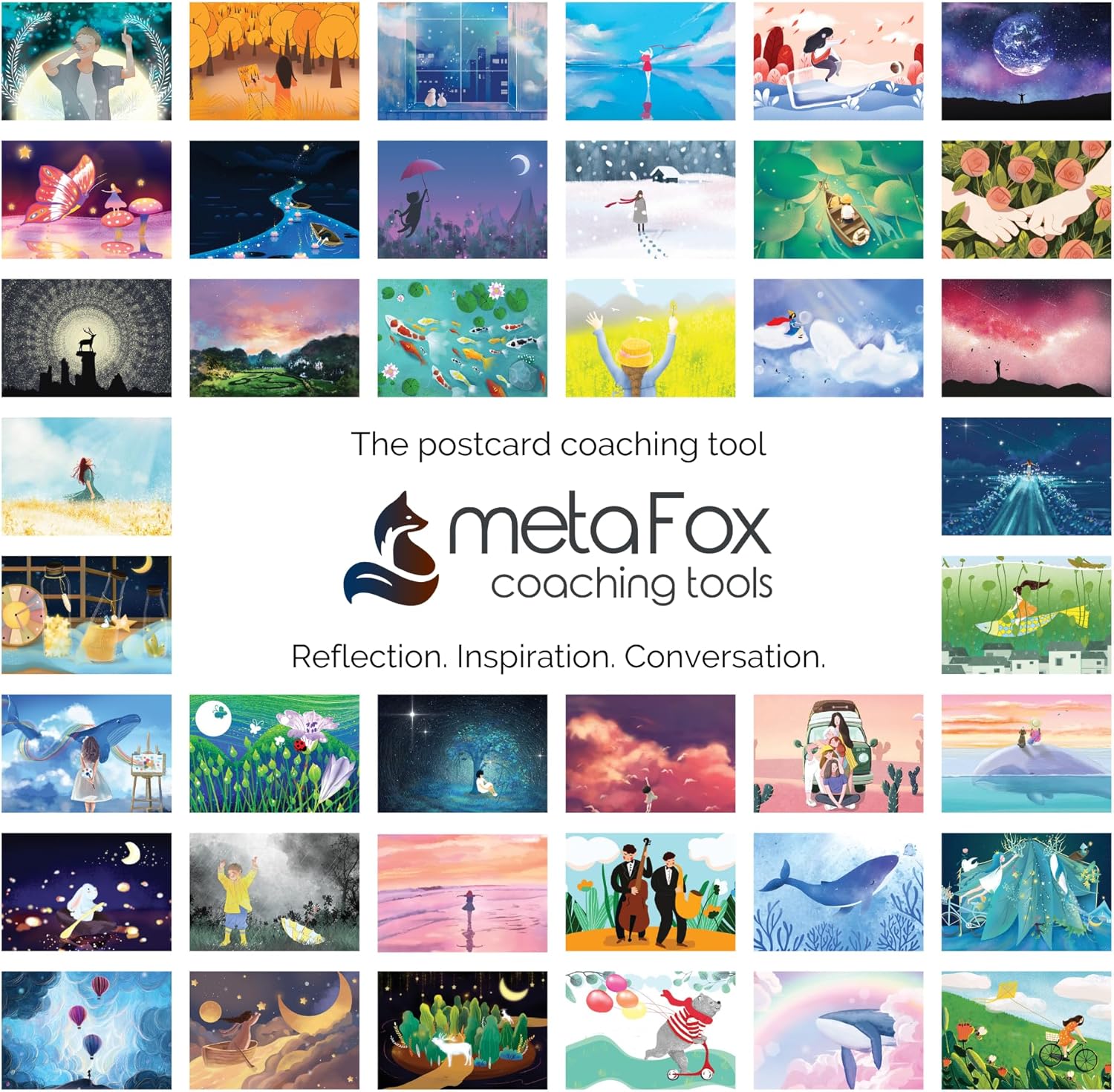
6. metaFox – 52 Inspirational, Positive Affirmations & Motivational Postcards, Picture Cards For Life Coaching, Therapy, & Personal Advice, Mindfulness, Coaching, Life Design Cards — Best for Major Life Decisions
Overview: Life Design Cards support reflection around choices and direction.
Key Features: 52 picture cards; supportive questions; guided design process for decisions and goals.
Pros: Flexible for coaching and broad life planning.
Cons: Less specific for measurable weekly targets.
Best For: People evaluating careers, relationships, or lifestyle changes.
Verdict: It works best when goal setting starts with deciding what kind of life you want.

7. metaFox What Really Matters! | 80 values cards for coaching, workshops & therapy | Premium-quality coaching cards to discover, prioritize & live by what matters most to you — Best for Deep Values Work
Overview: This set identifies and prioritizes values in structured conversations.
Key Features: 80 value cards; sorting exercises; formats suited to coaching and workshops.
Pros: Substantial and facilitator-friendly.
Cons: More specialized than simple prompt decks.
Best For: Coaches, facilitators, and committed self-development users.
Verdict: It is the premium pick for deeper values work that can inform meaningful goals repeatedly.

8. Holstee Reflection Cards – A Deck of 100+ Questions to Spark Meaningful Connections and Conversations — Best for Portable Reflection
Overview: Holstee turns reflective questions into a portable thinking ritual.
Key Features: 52 cards; 104 questions; themes including creativity, resilience, gratitude, compassion, and adventure.
Pros: Compact, reusable, and shareable.
Cons: No formal goal-to-action sequence.
Best For: People who journal or reflect with others.
Verdict: Though broader than strict planning, it can uncover priorities that become better goals.

9. The School of Life Know Yourself Prompt Cards: Cards for Self Exploration — Best for Beginners
Overview: Know Yourself examines identity, preferences, and priorities before direction-setting.
Key Features: 60 prompts; self-exploration exercises; analysis-oriented format.
Pros: Straightforward and beginner-friendly.
Cons: It emphasizes insight rather than milestones or accountability.
Best For: Anyone new to reflective decks or struggling to define meaningful objectives.
Verdict: Its accessible prompts make it a sensible starting point before structured execution.

10. CATCHYOURDREAMS Mind Of A Champion – Motivational Cards for Men Affirmations and Action Steps to Turn Dreams into Reality – For Productivity, Personal Development, Self Care, Mindfulness, Affirmation Cards for Men — Best for Action-Oriented Motivation
Overview: Mind Of A Champion combines motivation with action prompts for men.
Key Features: Affirmations; action steps; productivity and personal-development themes.
Pros: More action-focused than affirmation-only decks.
Cons: Gendered positioning narrows its audience.
Best For: Men who prefer concise daily motivational cues.
Verdict: It fills a specialized niche for encouragement that points toward doing something, rather than only repeating positive phrases.

How to Choose the Best Goal-Setting Card Decks
Start with the job you need the cards to do. Execution decks suit people who know the outcome but need daily priorities. Values and self-discovery decks help when the challenge is choosing meaningful direction. Coaching decks should create discussion without forcing answers.
Next, compare structure. Ordered methods guide beginners, while open-ended imagery suits brainstorming. Check whether cards are reusable, writable, pocket-friendly, or large enough for workshops. Deck size matters too: smaller sets are quicker to learn; large values libraries offer finer distinctions.
Consider extras such as booklets, stands, sorting systems, or journaling companions. If you want a written companion to your cards, SelfCraftr’s goal-setting worksheet shows how to move from a broad goal to smaller steps and progress checks. Choose a deck that complements your planning style rather than duplicating tools you already avoid.
Frequently Asked Questions About Goal-Setting Card Decks
Are Goal-Setting Card Decks better than planners?
Not universally. Cards excel at prompts, sorting, reflection, and visible reminders; planners handle calendars, deadlines, and records better. Using cards for clarity and a planner for execution can combine both strengths.
Can beginners use these decks without a coach?
Yes. Decks with instructions, ordered prompts, or fewer cards are easiest alone. Coaching-oriented decks can also work independently, especially when you write down answers instead of rushing through prompts.
Which deck type works best for daily focus?
Choose an execution-focused format linking a defined goal to today’s priorities. Goal and checklist cards are more practical for daily focus than abstract values decks, which primarily help decide what deserves attention.
How often should I use a goal-setting deck?
Match frequency to purpose. Daily action cards can be reviewed each morning; values or life-design cards may fit weekly reviews, quarterly planning, or major decisions. Consistency matters more than constant card drawing.
Can one deck cover personal and professional goals?
Often. Values-based and coaching decks transfer well across life and work because they explore priorities and decisions. Highly themed motivation decks can be narrower, so review the prompt style before buying.
Final Verdict
Values Vault is best overall for deep personal and professional goal alignment. Mind Design is the best budget option because it connects goal cards with daily checklists. metaFox What Really Matters! is the best premium choice for coaching and workshop use. IKIGAIN Ikigai Self-Discovery Cards are best for beginners who need purpose before planning. Mind Of A Champion is the best specialized option for men seeking action-oriented motivation.
Before buying Goal-Setting Card Decks, compare card count, prompt style, included materials, and intended use. Confirm dimensions where relevant, review current warranty or return details, and check Amazon.com for current availability, seller information, and product changes before purchasing.