Top 10 Accountability Journals
We may earn a commission for purchases made using our links. Please see our disclosure to learn more.
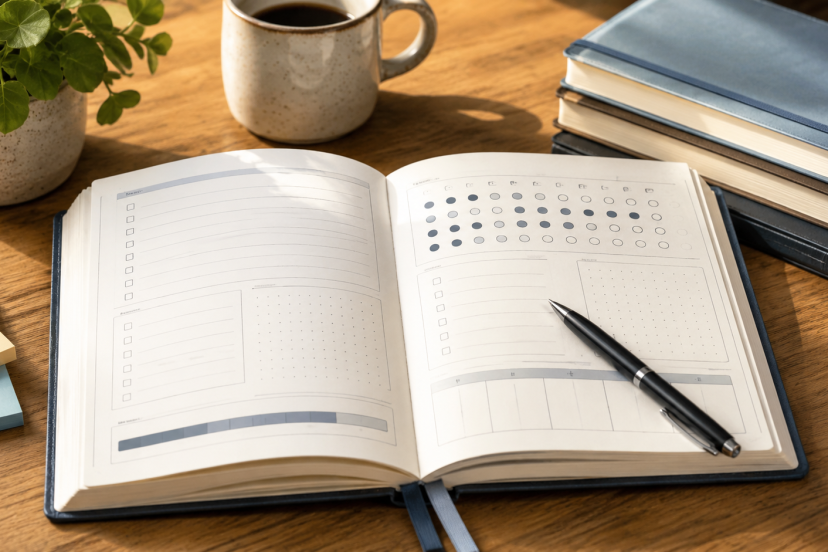
Accountability Journals turn intentions into visible commitments by giving you a place to set goals, plan actions, track habits, and review results. They suit students, professionals, entrepreneurs, and anyone who wants structure than a blank notebook provides. The right journal can reduce forgotten priorities, reveal patterns, and make progress easier to measure in everyday working life. I compared these options for planning depth, reflection tools, habit tracking, portability, build quality, and value, favoring undated formats that let you start anytime.
Comparison Table
| Product | Best for | Key feature | Main limitation | Price category | Overall recommendation |
| BestSelf Self Journal | Overall accountability | 13-week system | Detailed setup | Mid-range | Best overall |
| Goal Crazy Planner | Goal execution | 90-day framework | Dense pages | Mid-range | Strong choice |
| Clever Fox Ultimate Achiever | Goal sprints | Milestone planning | Short cycle | Mid-range | Great for projects |
| Panda Planner Classic | Beginners | Daily reflection | Repetitive prompts | Mid-range | Easy start |
| Intelligent Change Productivity Planner | Premium focus | Priority framework | Three-month lifespan | Premium | Refined choice |
| High Performance Planner | Self-scoring | Daily scorecards | Large format | Variable | Best for review |
| Legend Planner PRO | Big-picture planning | 12-month structure | Less portable | Mid-range | Versatile |
| GoGirl Planner | Compact planning | Portable format | Limited space | Budget | Best budget |
| Freedom Mastery Life Planner | Mindset work | Vision tools | Busy layout | Mid-range | Specialized |
| Rocketbook Fusion | Reusable planning | Cloud scanning | FriXion pens required | Premium | Digital hybrid |
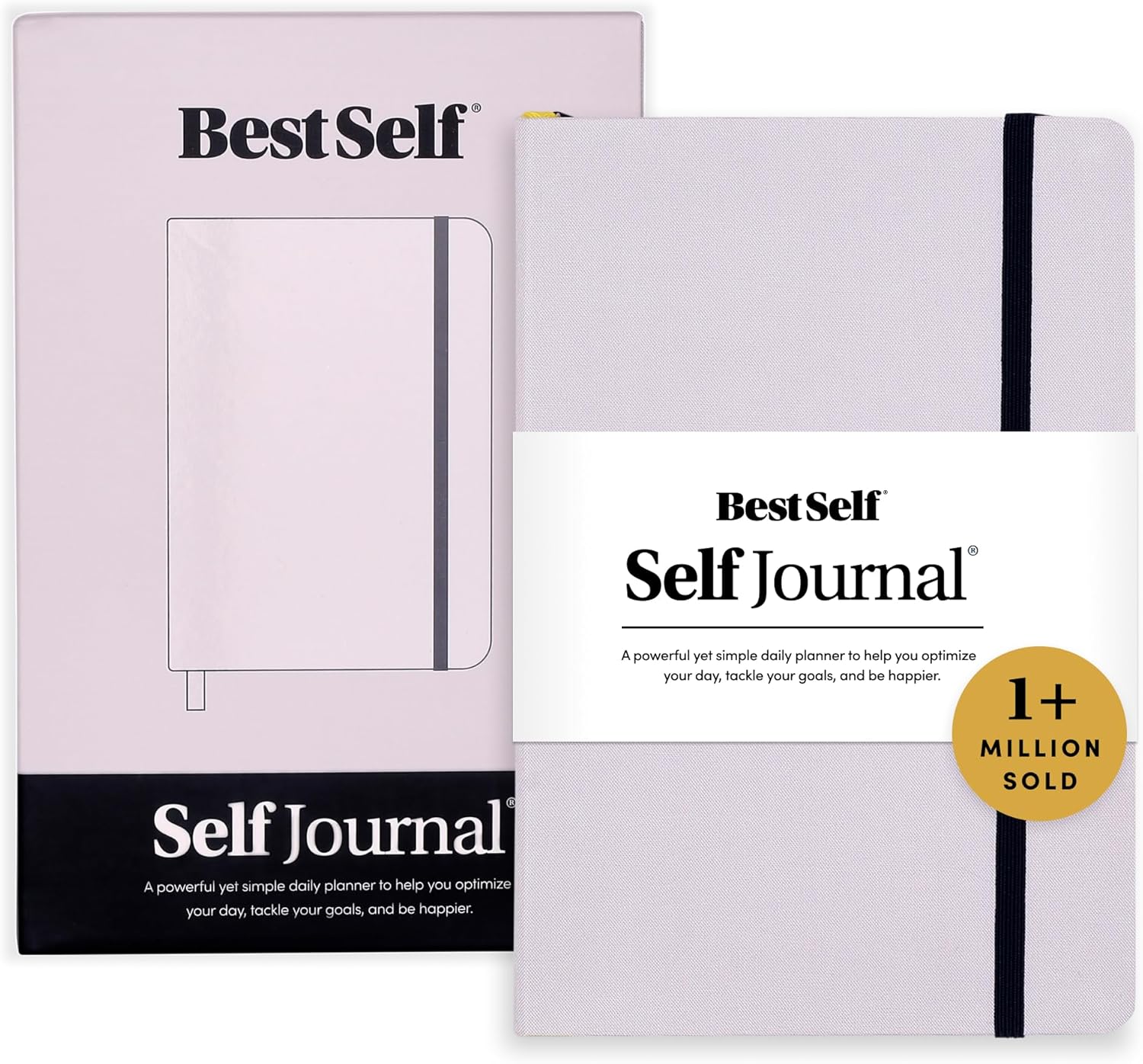
1. BestSelf Self Journal — Best for Overall Accountability
Overview: This undated 13-week planner combines goal setting, daily planning, gratitude, habit tracking, and weekly reflection. Its cycle helps you pursue measurable progress without committing to a full year.
Key Features: 240 pages; 5.75-by-8.5-inch size; 110gsm paper; lay-flat binding; goal roadmap.
Pros: Strong goal-to-action structure; durable hardcover; useful reflection space.
Cons: More setup than a simple agenda.
Best For: Professionals, students, and self-directed goal setters.
Verdict: It takes the top spot because planning, tracking, and reflection work together as one accountability system.
2. Goal Crazy Undated Planner — Best for Structured Goal Execution
Overview: Goal Crazy organizes 90 days around defined goals, action plans, daily priorities, weekly reviews, and habit tracking. It feels more like a guided workbook than an appointment planner.
Key Features: Undated 90-day system; A5 format; daily and weekly layouts; habit tracker; goal exercises; hardcover.
Pros: Clear goal-to-action progression; useful review rhythm; start-anytime format.
Cons: Guided sections may feel dense for minimalists.
Best For: People who want step-by-step accountability for one quarter.
Verdict: Choose it when your challenge is consistently translating goals into scheduled actions.

3. Clever Fox 13-Week Ultimate Achiever’s Planner — Best for Goal Sprints
Overview: This A5 planner centers on a 13-week push, with space to define goals, break them into milestones, schedule work, track habits, and review progress.
Key Features: 90-day cycle; daily, weekly, and monthly layouts; hourly schedule; affirmations; habit tracking; 120gsm paper.
Pros: Detailed milestone planning; sturdy materials; strong daily structure.
Cons: Intensive for light planning.
Best For: Launches, study plans, fitness goals, and quarter-length projects.
Verdict: It suits readers who perform better with a sprint and frequent checkpoints.

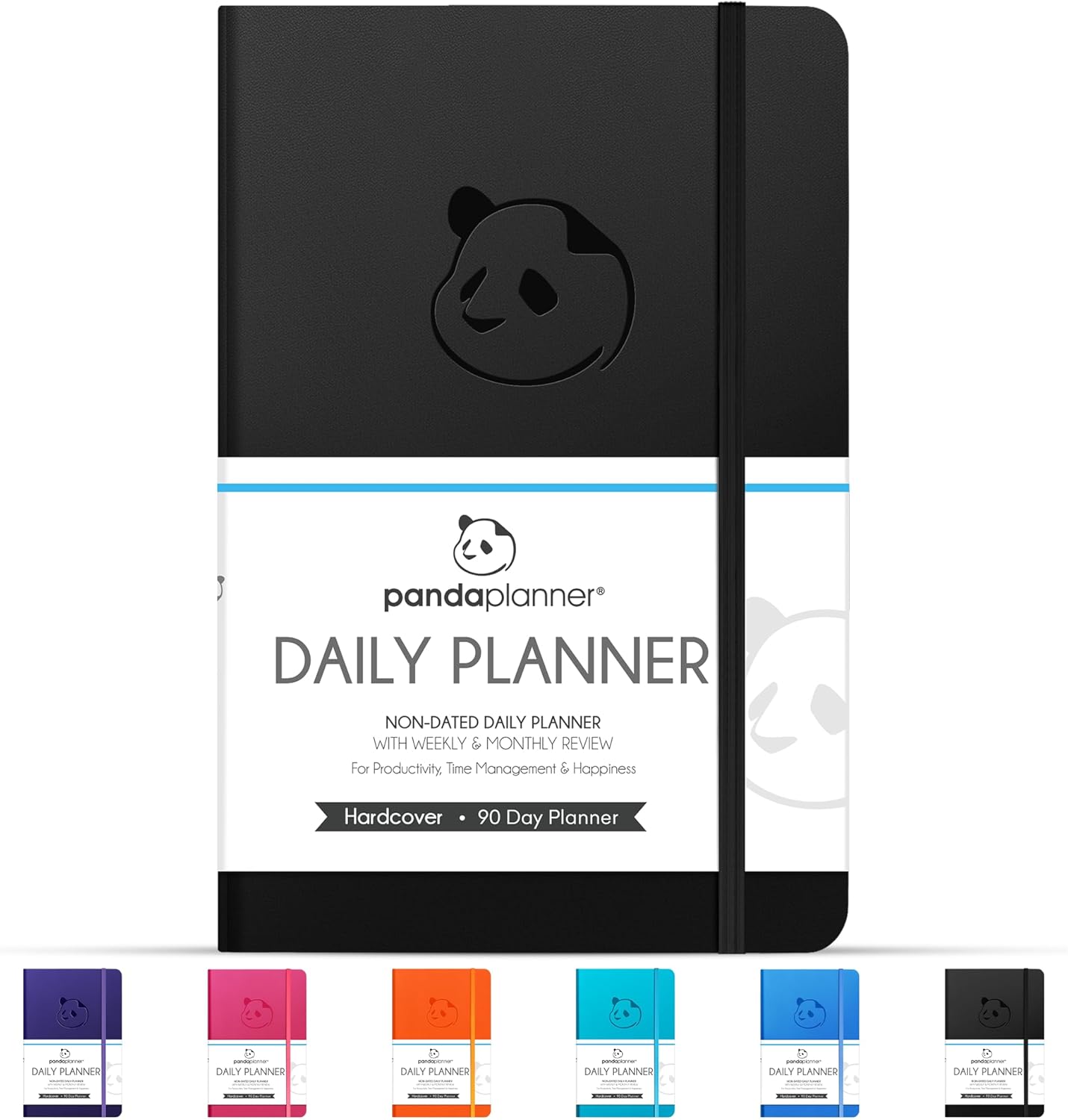
4. Panda Planner Classic — Best for Beginners
Overview: Panda Planner mixes scheduling with gratitude, priorities, habits, and end-of-day reflection. The prompts are simple enough for first-time planner users while still creating a routine.
Key Features: Undated daily, weekly, and monthly sections; A5 size; hourly schedule; habit tracker; gratitude prompts; 100gsm paper.
Pros: Approachable layout; balanced planning and reflection; flexible start date.
Cons: Prompts can feel repetitive over time.
Best For: Beginners wanting guidance without a complicated goal curriculum.
Verdict: It makes accountability approachable by turning it into a short daily practice.
5. Intelligent Change 3-Month Productivity Planner — Best for Premium Focus
Overview: Intelligent Change emphasizes prioritization, focused work, mindful reflection, and scheduling. Its 90-day format is cleaner than many heavily guided goal journals.
Key Features: A5 size; two-page daily layout; weekly planning and review; monthly habit trackers; 6:00 a.m. to 9:30 p.m. schedule.
Pros: Polished design; strong focus framework; thoughtful prompts.
Cons: Three months means frequent replacement for year-round use.
Best For: Professionals wanting a refined, distraction-light productivity system.
Verdict: It balances getting things done with reviewing how you work.

6. The High Performance Planner — Best for Daily Self-Scoring
Overview: Brendon Burchard’s planner pairs a schedule with morning prompts, evening review scorecards, weekly habit assessments, and monthly planning. Its self-rating approach makes progress visible.
Key Features: Undated 60-day format; 192 pages; 8.4-by-11.5-inch size; morning prompts; evening scorecards; weekly assessments.
Pros: Excellent review discipline; substantial writing room; clear feedback loop.
Cons: Executive size is bulky for commuting.
Best For: Managers, founders, coaches, and users who enjoy scoring consistency.
Verdict: Few options make reflection as concrete through repeated self-assessment.

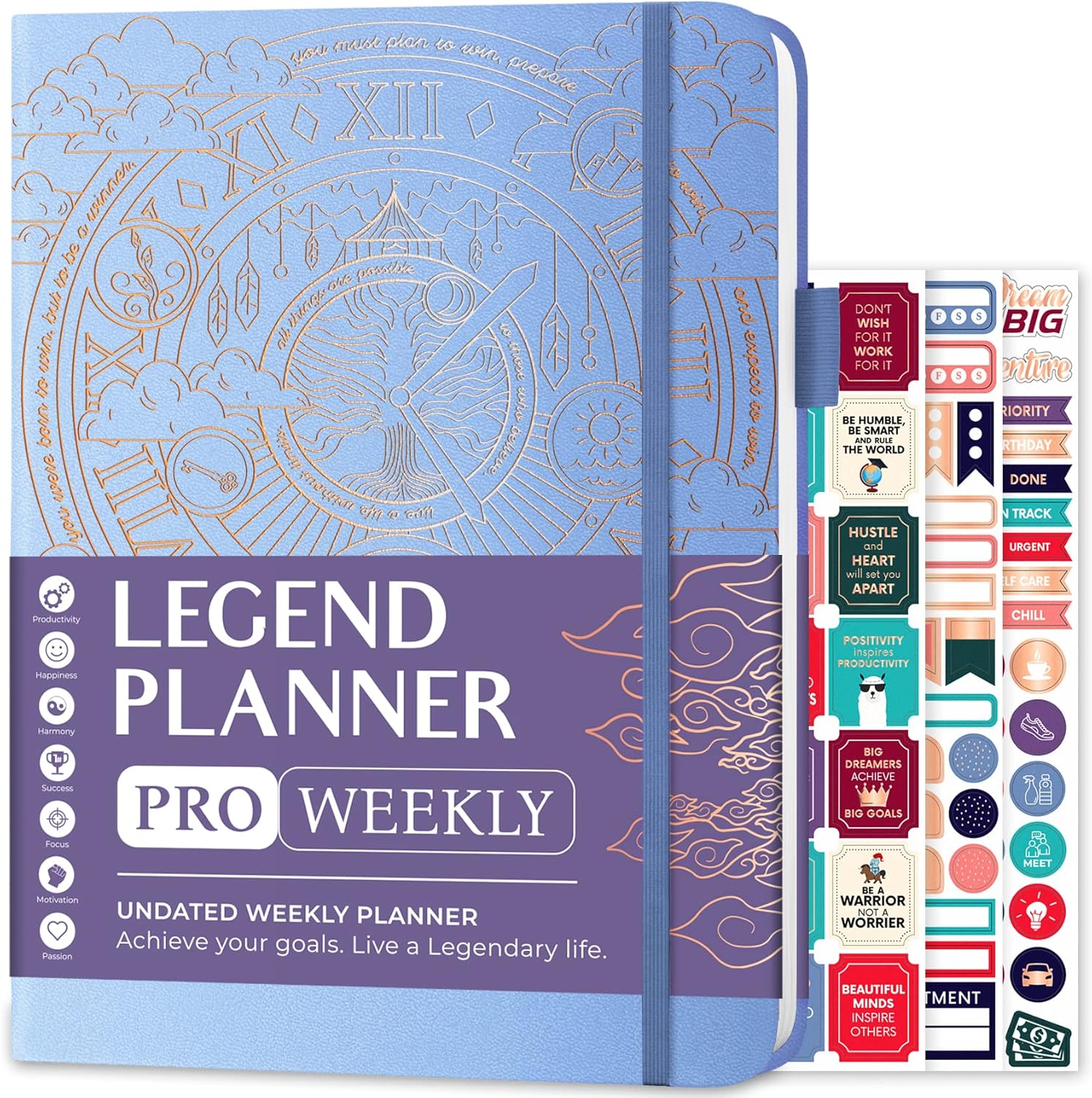
7. Legend Planner PRO Weekly & Monthly — Best for Big-Picture Planning
Overview: Legend Planner PRO stretches accountability across a year, combining long-term goals with monthly and weekly planning, habit tracking, priorities, and reflection.
Key Features: Undated 12-month structure; 7-by-10-inch format; weekly and monthly layouts; goal sections; habit trackers; 120gsm paper.
Pros: Broad planning scope; ample writing area; durable hardcover.
Cons: Larger footprint reduces portability.
Best For: Users balancing career, personal, wellness, and financial goals.
Verdict: It connects long-range direction with recurring reviews without forcing a dated calendar.
8. GoGirl Planner for Women — Best for Compact Value
Overview: The compact GoGirl Planner packs goal setting, monthly planning, weekly priorities, and organization prompts into a 5.3-by-7.7-inch book.
Key Features: Undated annual format; compact size; monthly and weekly spreads; goal sections; priority areas; hardcover.
Pros: Portable; budget-friendly positioning; year-long planning horizon.
Cons: Small pages limit detailed journaling.
Best For: Commuters, students, and budget-conscious users wanting accountability on the go.
Verdict: Portability, structure, and approachable cost make it the strongest budget-oriented choice here.

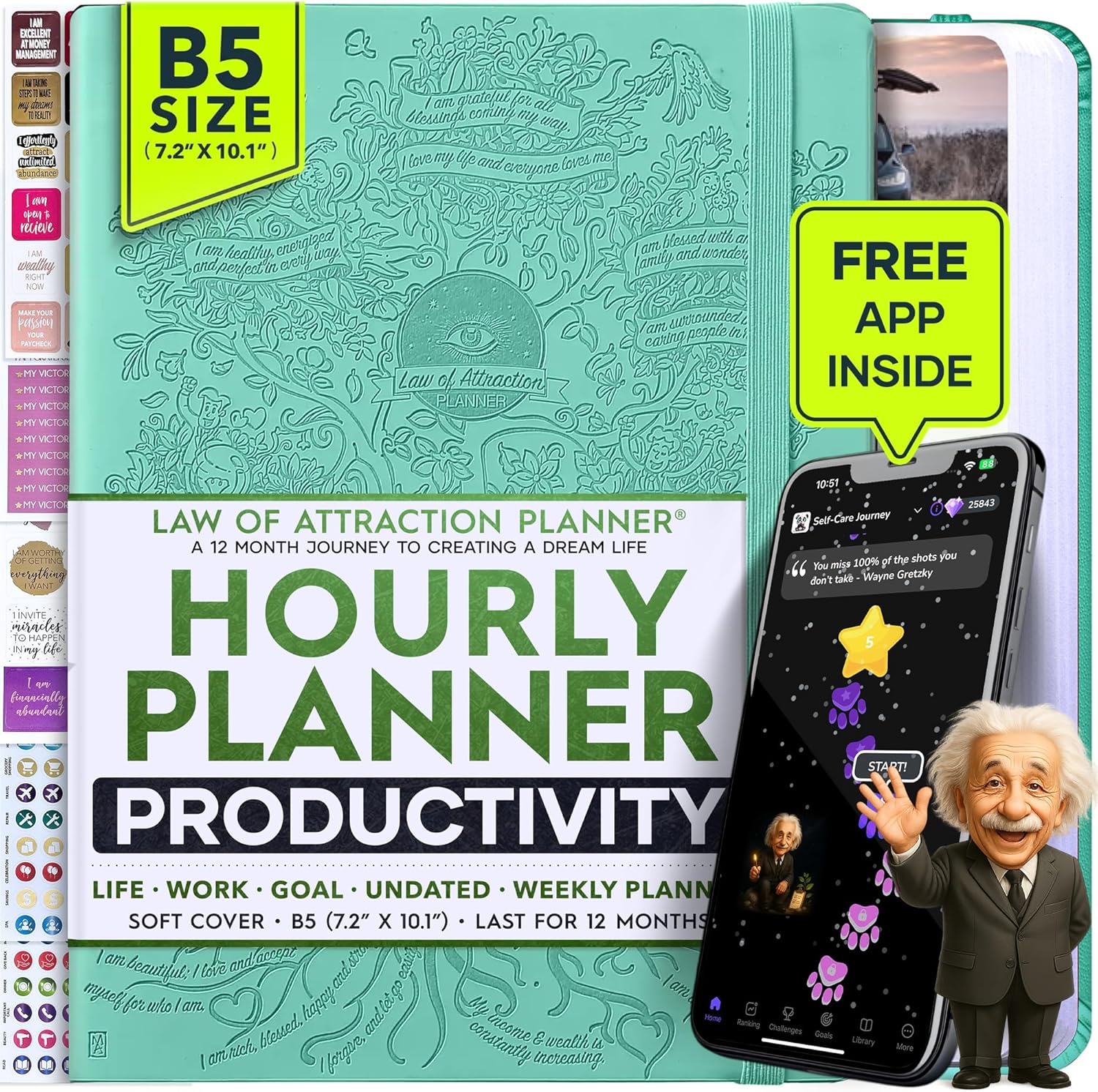
9. Freedom Mastery Life Planner Deluxe — Best for Mindset-Based Accountability
Overview: This undated planner combines scheduling with manifestation-style exercises, a vision board, habit trackers, routines, reflections, and goal setting.
Key Features: B5 format; 248 pages; weekly and monthly planning; habit tracking; vision board; reflection pages; dotted journal pages.
Pros: Deep mindset prompts; broad personal-development scope; many tracking tools.
Cons: Visually busy for minimalist users.
Best For: Readers who connect motivation, visualization, and reflection with consistent action.
Verdict: It fills a specialized niche by treating accountability as behavioral tracking plus mindset work.
10. Rocketbook Fusion Reusable Productivity Planner — Best for Reusable Digital Planning
Overview: Rocketbook Fusion combines erasable paper with planning templates and app-based scanning. Write goals and schedules, send pages to cloud destinations, then wipe and reuse them.
Key Features: 42 reusable pages; weekly and monthly templates; task list; OKR page; lined and dotted pages; Pilot FriXion compatibility.
Pros: Reusable; easy digital archiving; flexible templates.
Cons: Requires FriXion tools and periodic cleaning.
Best For: Tech-friendly users wanting handwritten accountability without accumulating notebooks.
Verdict: It stands out for combining paper planning with shareable digital records.

How to Choose the Best Accountability Journals
Start with accountability cadence. Daily pages help when execution is your challenge; weekly reviews reveal patterns; 90-day systems support defined goal cycles. Next, check writing space and portability. Compact books travel easily but constrain reflection, while larger planners give complex schedules room.
Consider tracking style. Habit grids show consistency, scorecards force evaluation, and prompts help diagnose what worked. Choose only mechanisms you will actually complete. Undated layouts forgive skipped days; reusable pages reduce replacement waste but require compatible pens.
Finally, match the journal to a review ritual. SelfCraftr’s productivity tips that turn goals into consistent progress explain how weekly actions, daily priorities, time blocking, and progress reviews reinforce the same loop. A journal works best when its pages support a routine you can repeat.
Frequently Asked Questions About Accountability Journals
What should an accountability journal include?
Look for clear goals, actionable priorities, progress tracking, and recurring review space. Habit trackers, time blocks, or reflection prompts help when they support your specific goal.
Are undated Accountability Journals better than dated planners?
They suit flexible starts and inconsistent schedules because skipped days do not waste pages. Dated planners are preferable when calendar continuity matters more.
How often should I review my journal?
Daily check-ins keep actions visible. A weekly review helps you evaluate patterns, reset priorities, and decide what needs adjustment before another week begins.
Can an accountability journal replace a task-management app?
Sometimes. Paper works well for focus and reflection, while apps are stronger for reminders, collaboration, recurring tasks, and searchable project details.
Which format is best for beginners?
Choose simple daily priorities, a short reflection, and a weekly review. Too many trackers or elaborate exercises can create friction before the habit forms.
Final Verdict
Among these Accountability Journals, the BestSelf Self Journal is best overall for its integrated 13-week planning, tracking, and reflection system. GoGirl Planner is the best budget and compact option. Intelligent Change Productivity Planner is the premium pick for focused daily planning. Panda Planner Classic is best for beginners because its prompts are easy to adopt. Rocketbook Fusion is the best specialized option for reusable paper and digital archiving.
Before buying, compare specifications, confirm size and layout compatibility, review current warranty or return details, and check current product information and availability on Amazon.com.