Top 10 Personal Development Workbooks
We may earn a commission for purchases made using our links. Please see our disclosure to learn more.
Personal Development Workbooks turn self-help ideas into exercises, reflections, and practical steps. They suit readers seeking more than passive inspiration, whether the goal is building confidence, clarifying direction, changing habits, strengthening resilience, or understanding recurring patterns. Choosing the right workbook matters because structure, depth, and emotional intensity vary widely. We compared current Amazon.com options by exercise quality, usability, focus, format, author expertise, value, and limitations. The ten picks cover beginner tools, goal systems, creativity work, and psychologically informed exercises. A match should feel challenging enough to create insight without making the process confusing, exhausting, or impossible to maintain.
Comparison Table
| Product | Best for | Key feature | Main limitation | Price category | Overall recommendation |
| Self-Love Workbook for Women | Overall growth | Psychology-based prompts | Women-specific framing | Budget | Top pick |
| Designing Your Life Workbook | Life transitions | Odyssey Plans | Takes sustained reflection | Mid-range | Excellent direction |
| 7 Habits Personal Workbook | Principle-based growth | Seven-habit framework | Formal tone | Mid-range | Strong structure |
| Success Principles Workbook | Goal achievement | Action worksheets | Needs steady commitment | Budget | Practical choice |
| Artist’s Way Workbook | Creativity | 110-plus tasks | Spiritually framed | Premium | Best creative option |
| Shadow Work Journal | Deep reflection | Expanded prompts | Emotionally intense | Budget | Useful with boundaries |
| Mindful Self-Compassion Workbook | Self-criticism | Mindfulness practices | Relatively dense | Mid-range | In-depth pick |
| Get Out of Your Mind and Into Your Life | Values-based action | ACT exercises | Emotional material | Mid-range | Specialized pick |
| Growth Mindset Workbook | Resilience | CBT-based reframing | Requires repeated practice | Budget | Great for setbacks |
| Self-Confidence Workbook | Beginners | Five-step program | Narrow focus | Budget | Beginner pick |
1. Self-Love Workbook for Women — Best for Overall Personal Growth
Overview: Megan Logan’s workbook guides women through self-doubt, self-compassion, confidence, and identity using an encouraging, accessible approach.
Key features: Psychology-based activities, mindfulness exercises, reflective prompts, affirmations, and space for written responses.
Pros: Warm tone; approachable; balances insight with action.
Cons: The women-specific language may not suit every reader.
Best for: Anyone wanting a supportive entry point into guided self-development.
Verdict: Its broad focus and approachable exercises make it the most versatile choice.

2. The Designing Your Life Workbook — Best for Life Transitions
Overview: Bill Burnett and Dave Evans apply design-thinking methods to decisions involving work, balance, purpose, and future possibilities.
Key features: Health/Work/Play/Love Dashboard, Lifeview and Workview questions, Good Time Journal pages, mind-mapping paper, Odyssey Plans, and interview tracking.
Pros: Visual tools; explores multiple futures; useful across career stages.
Cons: Exercises demand time and honest experimentation.
Best for: Graduates, career changers, retirees, or readers feeling directionless.
Verdict: It turns uncertainty into testable options instead of demanding one perfect plan.

3. The 7 Habits of Highly Effective People Personal Workbook — Best for Principle-Based Growth
Overview: Stephen R. Covey’s companion workbook translates the seven-habit framework into guided personal and professional exercises.
Key features: Step-by-step habit exploration, goal-setting activities, relationship reflection, principle-centered prompts, and action planning.
Pros: Comprehensive framework; useful at work and home; welcomes newcomers.
Cons: The language can feel more formal than newer workbooks.
Best for: Readers who prefer a systematic philosophy rather than isolated prompts.
Verdict: It connects daily choices with values, relationships, and long-term effectiveness.

4. The Success Principles Workbook — Best for Goal Achievement
Overview: Jack Canfield, Brandon Hall, and Janet Switzer convert familiar success principles into a hands-on action program.
Key features: Step-by-step instructions, self-discovery exercises, Make-It-a-Habit worksheets, guided journaling, responsibility prompts, and goal clarification.
Pros: Action-oriented; covers personal and professional aims; progresses clearly.
Cons: Its motivational style may feel intense to reflective readers.
Best for: People ready to define goals and follow through consistently.
Verdict: This is one of the strongest Personal Development Workbooks for converting ambition into scheduled, measurable action.

5. The Artist’s Way Workbook — Best Premium Option for Creativity
Overview: Julia Cameron’s spiral-bound workbook supports creative recovery through tasks, check-ins, journaling, and solo creative experiences.
Key features: More than 110 tasks, over 50 check-ins, Morning Pages guidance, Artist’s Date material, and creative-process reflections.
Pros: Generous exercises; practical binding; distinctive creative focus.
Cons: Its spiritual language will not resonate with everyone.
Best for: Writers, artists, makers, and professionals experiencing creative blocks.
Verdict: The durable format and extensive activity collection justify its premium position for creativity-focused buyers.

6. The Shadow Work Journal 2nd Edition — Best for Deep Self-Reflection
Overview: Keila Shaheen’s expanded journal explores fears, insecurities, triggers, and behavior patterns through guided reflection.
Key features: Updated learning material, hands-on exercises, journal prompts, trigger exploration, and a redesigned layout.
Pros: Focused self-discovery; direct questions; ample writing space.
Cons: Some prompts may feel emotionally heavy or overly broad.
Best for: Experienced journalers comfortable examining uncomfortable patterns slowly.
Verdict: It offers a specialized depth that lighter motivational workbooks rarely attempt, though it is not a substitute for professional care.

7. The Mindful Self-Compassion Workbook — Best for Reducing Self-Criticism
Overview: Kristin Neff and Christopher Germer present a structured program for responding to difficulty with mindfulness, kindness, and balanced awareness.
Key features: Twenty-four topic chapters, practices for difficult emotions, relationship exercises, caregiver material, self-appreciation work, and reference resources.
Pros: Detailed curriculum; experienced authors; wide emotional coverage.
Cons: Longer and more demanding than a quick guided journal.
Best for: Readers who want a thorough, practice-based approach to self-compassion.
Verdict: Its depth suits people prepared to work gradually rather than rush completion.

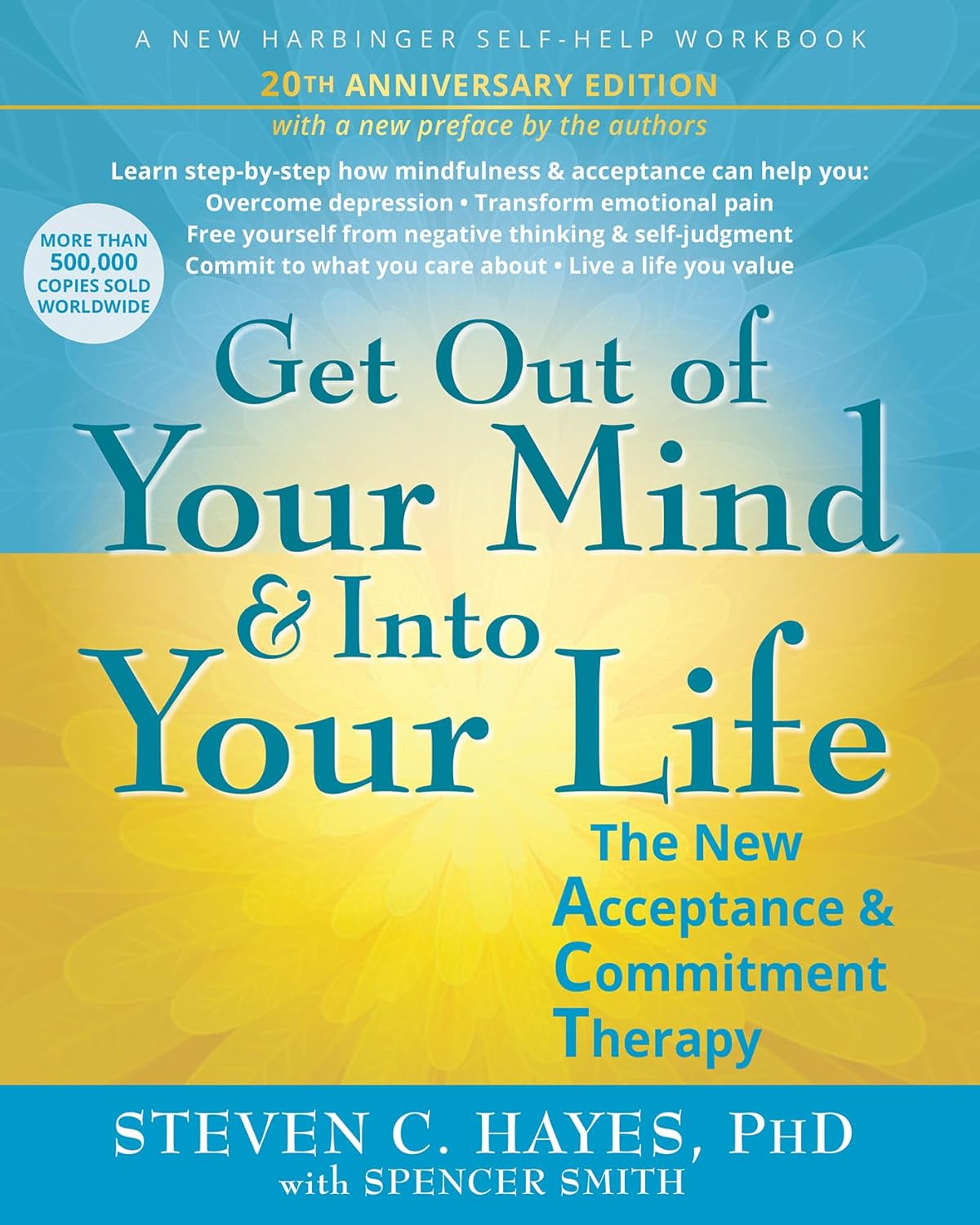
8. Get Out of Your Mind and Into Your Life — Best for Values-Based Action
Overview: Steven C. Hayes and Spencer Smith use acceptance and commitment therapy to build psychological flexibility and purposeful action.
Key features: Acceptance exercises, values clarification, mindfulness practices, thought-defusion activities, and commitment planning in a twentieth-anniversary edition.
Pros: Specialized framework; practical exercises; connects values with behavior.
Cons: Difficult thoughts and emotions receive substantial attention.
Best for: Readers whose overthinking or avoidance repeatedly blocks meaningful action.
Verdict: It teaches values-based action without requiring perfect feelings.
9. The Growth Mindset Workbook — Best for Resilience
Overview: Elaine Elliott-Moskwa uses cognitive behavioral techniques to reconsider fixed beliefs about talent, ability, setbacks, and change.
Key features: CBT-based exercises, challenge reframing, confidence work, practical examples, resilience strategies, and progress reflection.
Pros: Clear central concept; useful after setbacks; applies across life areas.
Cons: Benefits depend on repeating the exercises during real challenges.
Best for: Students, professionals, and adults rebuilding confidence after disappointment.
Verdict: It makes growth mindset practical by making everyday interpretations more flexible and constructive.

10. The Self-Confidence Workbook — Best for Beginners
Overview: Barbara Markway and Celia Ampel provide a goal-oriented route from defining confidence to practicing it in relationships, work, and health.
Key features: Five-step program, starting-level assessment, self-acceptance strategies, mindfulness, checklists, reflections, and quizzes.
Pros: Friendly organization; specific confidence focus; manageable exercises.
Cons: Readers seeking broad life planning may find the scope limited.
Best for: Beginners who want structure without an overwhelming theory-heavy program.
Verdict: Its clear sequence and concrete activities make it an easy first workbook for addressing self-doubt.

How to Choose the Best Personal Development Workbooks
Start with the change you actually want. A workbook about creativity will frustrate someone needing career direction, while a goal system may feel shallow during emotional recovery. Check whether the format favors short prompts, long writing, visual mapping, or repeated behavioral practice. Match the emotional depth to your readiness; shadow work and therapy-informed exercises can surface difficult material. Choose a pace that supports consistency rather than rushing.
Consider whether you want a stand-alone workbook or a companion to a larger book. Also examine page layout, binding, writing space, and portability because inconvenient formats often go unused. Author credentials matter most when exercises involve mental-health methods. For broader context before choosing an exercise-based title, SelfCraftr’s guide to personal development books explains how different themes support goals, reflection, confidence, and resilience.
Frequently Asked Questions About Personal Development Workbooks
Do personal development workbooks really help?
They can help when you complete the exercises, test the suggestions, and review your progress. Buying one without using it changes very little.
Which workbook is best for a complete beginner?
The Self-Confidence Workbook offers a clear sequence, while Self-Love Workbook for Women provides a gentler, broader starting point for its intended audience.
How often should I use a workbook?
Two or three focused weekly sessions suit many readers. Follow the structure, but slow down when an exercise needs reflection.
Can I use several workbooks at once?
Yes, although one primary workbook usually reduces distraction. Add a second only when it serves a clearly different need.
Are therapy-based workbooks a replacement for professional help?
No. They may support reflection and skill practice, but urgent, severe, or persistent concerns deserve help from a qualified professional.
Final Verdict
Self-Love Workbook for Women is the best overall choice for its accessible range of exercises. The Success Principles Workbook is the best budget option for action-focused goal setters. The Artist’s Way Workbook is the premium winner for creative users who value extensive tasks and spiral binding. The Self-Confidence Workbook is best for beginners, while Get Out of Your Mind and Into Your Life is the best specialized option for values-based action.
Compare each workbook’s focus, format, edition, and price. Confirm dimensions, companion-book compatibility, and current return information where applicable. Finally, check the latest product details and availability on Amazon.com before purchasing.