Top 10 Productivity Planners
We may earn a commission for purchases made using our links. Please see our disclosure to learn more.
Productivity Planners turn appointments, priorities, projects, and goals into a visible action plan. They suit professionals, students, entrepreneurs, and anyone juggling scattered tasks. The right format highlights important work and supports consistent reviews. We compared layout, goal-setting depth, portability, usability, flexibility, and value. Price categories are relative because prices and availability change.
Productivity Planners Comparison
| Product | Best for | Key feature | Main limitation | Price category | Overall recommendation |
| Intelligent Change Productivity Planner | Focused daily work | Priority and time planning | Short coverage | Mid-range | Best overall |
| Full Focus Gray Linen Planner | Executives | Quarterly goal system | Detailed setup | Premium | Strong strategic choice |
| Clever Fox Planner PRO | Big-picture planning | Large weekly layouts | Bulky | Mid-range | Excellent desk planner |
| Panda Planner Classic | Beginners | Guided daily reflection | Three-month format | Mid-range | Easy starting point |
| BestSelf Self Journal | Goal sprints | Thirteen-week framework | Daily commitment | Mid-range | Best accountability |
| Roterunner Purpose Planner A5 | Planning plus notes | Dot-grid notebook pages | Dense structure | Mid-range | Flexible hybrid |
| Rocketbook Fusion | Reusable planning | Erasable templates | Special pens required | Mid-range | Best reusable option |
| Freedom Mastery Law of Attraction Planner | Vision planning | Vision board and prompts | Highly guided | Premium | Best for manifestation |
| Weekly Productivity Planner Dashboard Desk Pad | Visual weekly control | Fifty-four undated weeks | Limited long-term strategy | Budget | Best budget option |
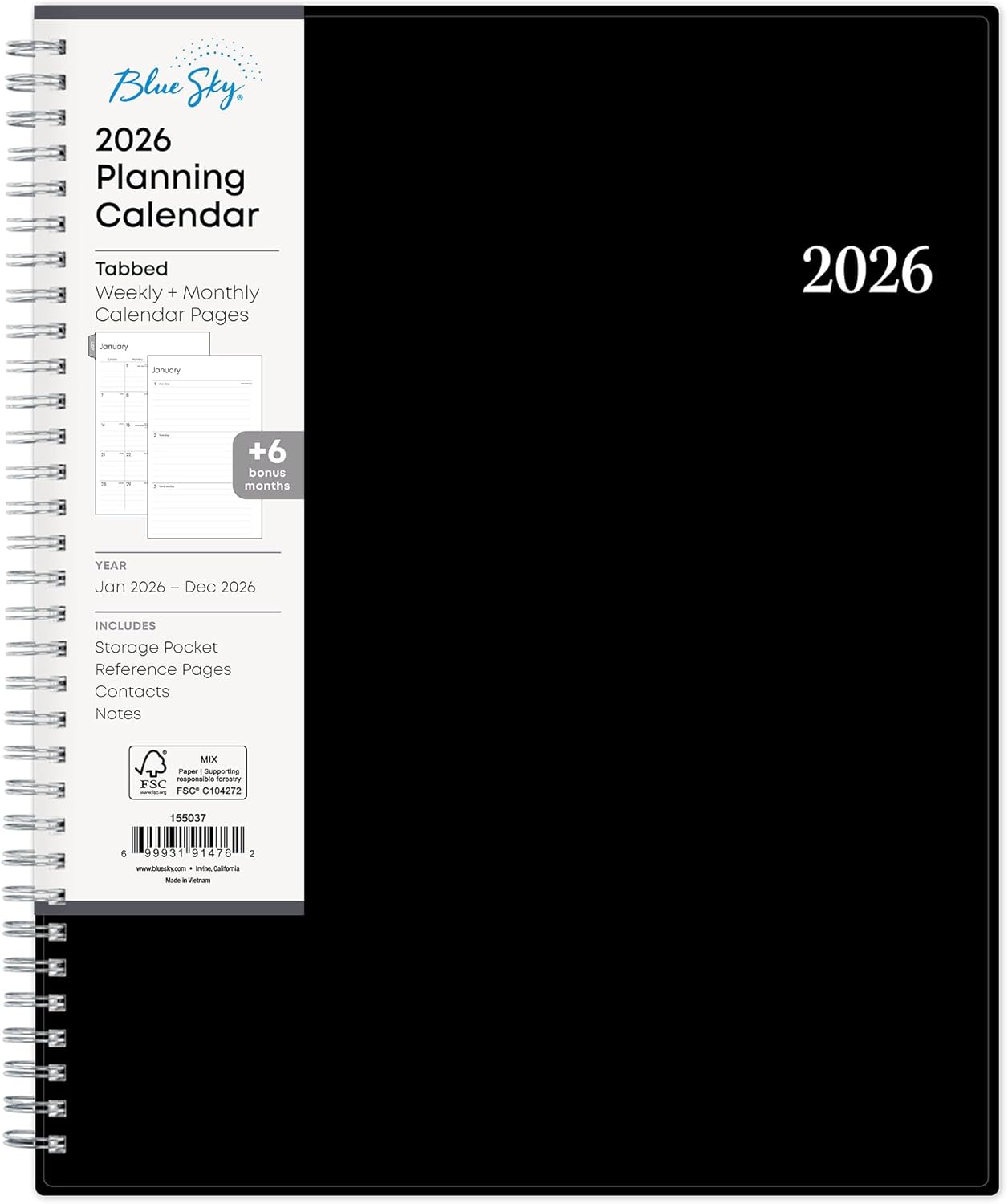
| Blue Sky 2026 Weekly and Monthly Planner | Traditional scheduling | Spacious weekly and monthly layouts | Less portable | Budget | Strong practical choice |
1. Intelligent Change Productivity Planner — Best for Focused Daily Work
Overview: This compact undated planner centers each day on priorities, scheduling, and review. It suits people wanting structure without a yearlong commitment.
Key features: Daily schedules, priority prompts, weekly planning, monthly calendars, habit tracking, and reflection space.
Pros: Portable size, clear focus, balanced prompts.
Cons: Limited-term coverage and less room for extensive project notes.
Best for: Professionals, freelancers, and remote workers managing concentrated tasks.
Verdict: Its blend of prioritization and reflection makes it the strongest all-around choice.

2. Full Focus Gray Linen Planner — Best for Executives
Overview: Full Focus connects annual goals with quarterly, weekly, and daily action. It is more strategic than a basic appointment book.
Key features: Goal-detail pages, monthly calendars, ideal-week planning, project tracking, weekly previews, Daily Big Three priorities, and quarterly reviews.
Pros: Strong goal hierarchy, thoughtful review process, premium presentation.
Cons: Requires setup time and may feel excessive for simple scheduling.
Best for: Leaders, owners, and professionals managing multiple outcomes.
Verdict: It earns the premium pick by turning long-range priorities into concrete daily decisions.

3. Clever Fox Planner PRO — Best for Big-Picture Planning
Overview: This large undated planner provides space for goals, monthly plans, weekly priorities, habits, and tasks.
Key features: Letter-size pages, monthly and weekly layouts, goal-setting exercises, habit trackers, 120-gsm paper, stickers, pocket, and lay-flat binding.
Pros: Generous writing room, durable materials, comprehensive planning sections.
Cons: Heavy for commuting and more detailed than minimalists need.
Best for: Desk-based users balancing work, goals, and home responsibilities.
Verdict: Choose it when visibility and writing space matter more than portability.

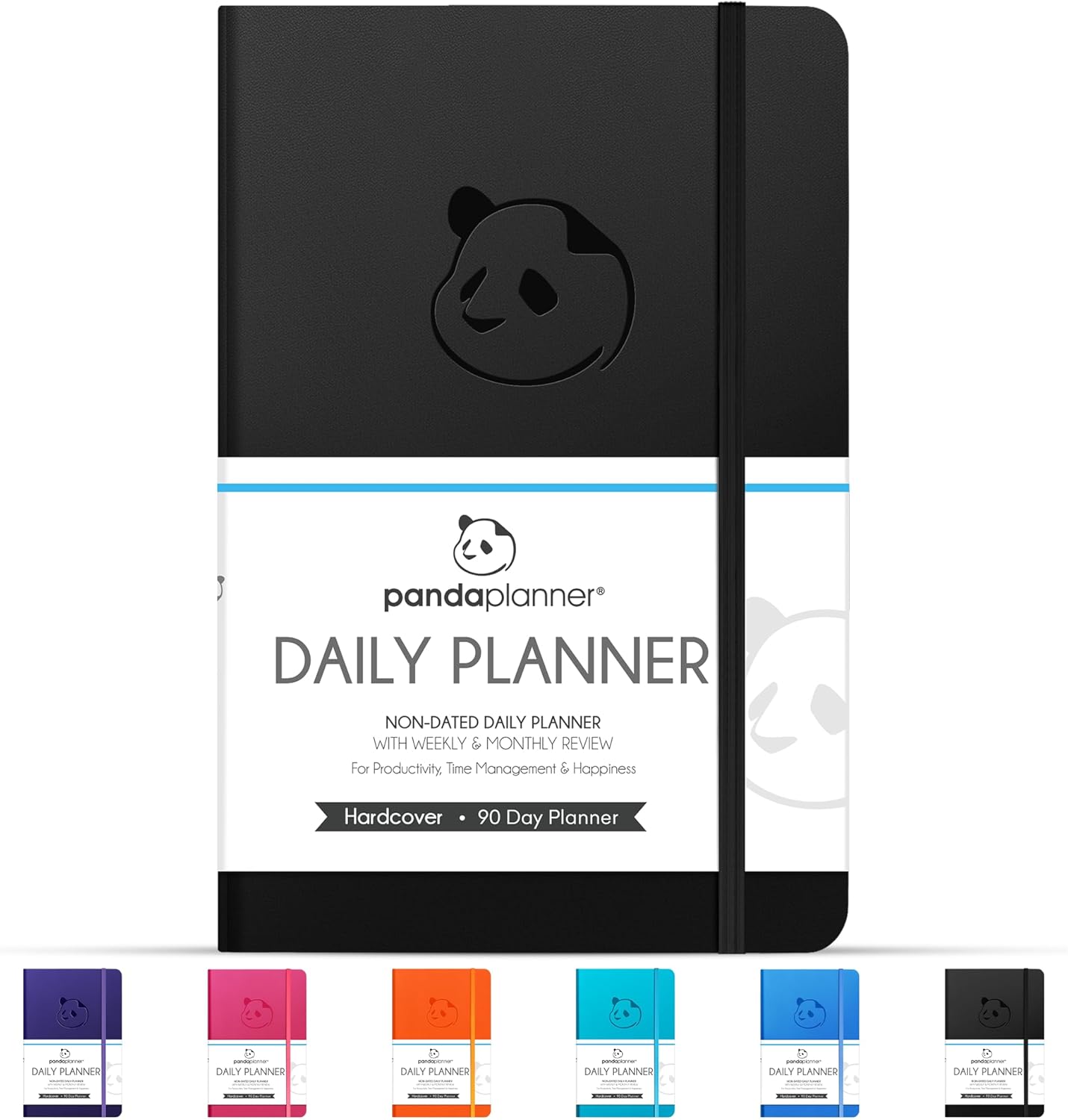
4. Panda Planner Classic — Best for Beginners
Overview: Panda Planner Classic combines monthly, weekly, and daily planning with gratitude, priorities, habits, and reflection.
Key features: Three-month undated format, monthly overviews, weekly planning, daily schedules, top priorities, gratitude prompts, and habit tracking.
Pros: Friendly guidance, manageable commitment, compact design.
Cons: Frequent repurchasing and limited room for long-range projects.
Best for: First-time planner users who want prompts instead of blank pages.
Verdict: The approachable layout teaches a planning rhythm without demanding a full year.
5. BestSelf Self Journal — Best for Goal Sprints
Overview: The Self Journal organizes thirteen weeks around three goals, linking them to weekly milestones and daily time blocks.
Key features: SMART-goal framework, thirteen-week roadmap, daily scheduling, habit tracking, weekly reviews, gratitude, and morning and evening reflection.
Pros: Strong accountability, measurable milestones, undated start.
Cons: Daily pages require consistent effort and the system favors a few goals.
Best for: Entrepreneurs, creators, students, or teams completing a quarterly objective.
Verdict: It suits buyers seeking visible progress during a focused sprint.

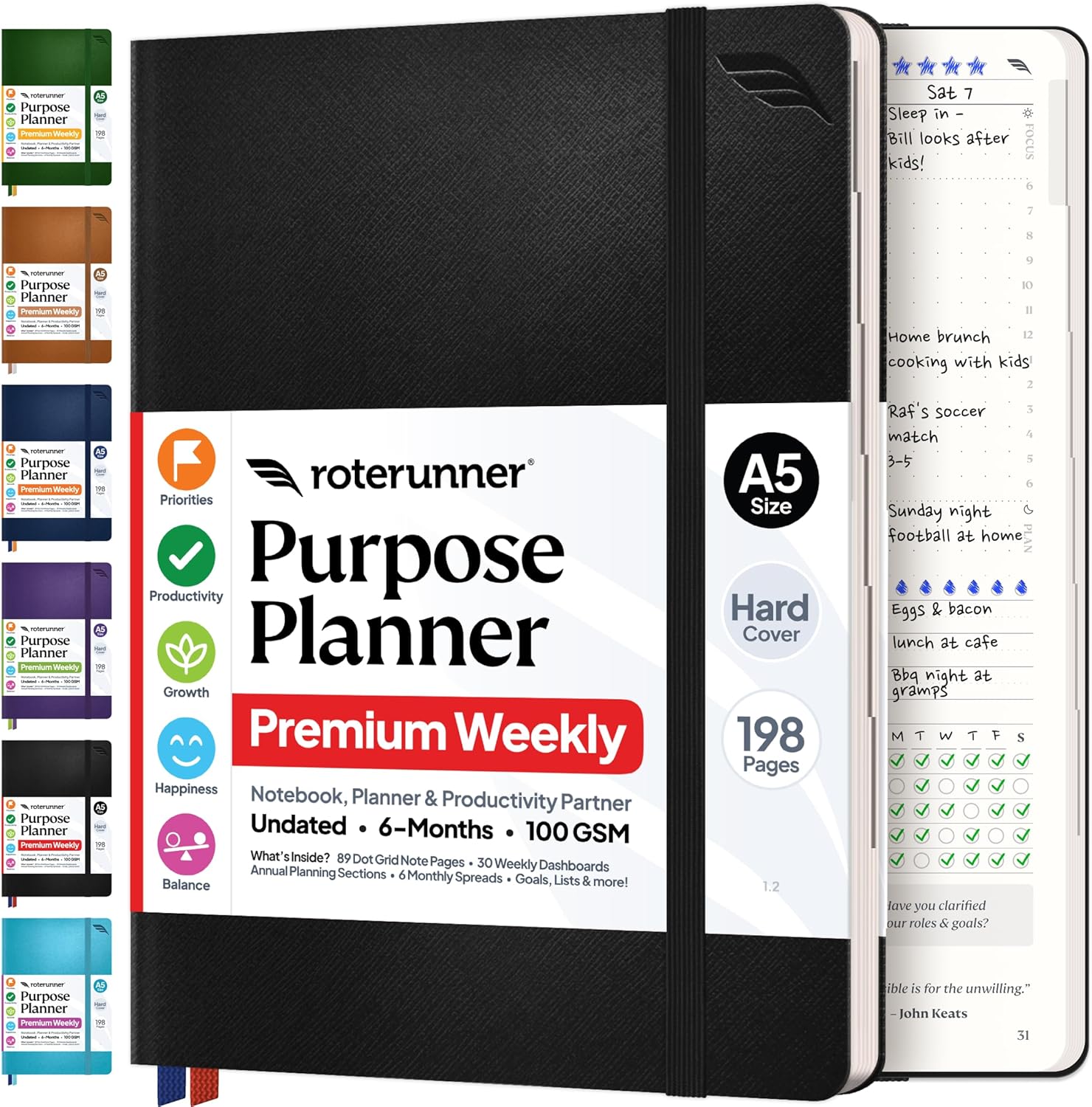
6. Roterunner Purpose Planner A5 — Best for Planning and Notes
Overview: Roterunner combines planning dashboards with dot-grid notebook space, replacing two books.
Key features: Daily, weekly, and monthly planning, goal prompts, habit and wellness tracking, A5 hardcover, lay-flat design, ribbon markers, pocket, and numbered notes pages.
Pros: Versatile hybrid format, portable dimensions, substantial note capacity.
Cons: Many sections can feel busy, and A5 pages limit sprawling handwriting.
Best for: Professionals, students, and creative planners.
Verdict: It works when your workflow mixes scheduling, journaling, sketches, and notes.
7. Rocketbook Fusion Reusable Productivity Planner — Best Reusable Option
Overview: Rocketbook Fusion combines erasable pages and app scanning with digital storage.
Key features: Reusable pages, goals, monthly and weekly calendars, task lists, project templates, lined and dot-grid notes, and cloud-compatible scanning.
Pros: Reusable format, flexible templates, easy digital archiving.
Cons: Requires compatible Pilot FriXion writing tools and occasional page cleaning.
Best for: Tech-friendly users who revise plans or want digital copies.
Verdict: Its paper-and-app workflow offers an alternative to disposable planners.

8. Freedom Mastery Law of Attraction Planner — Best for Vision Planning
Overview: This guided planner combines scheduling with visualization, gratitude, reflection, and goal breakdowns.
Key features: Foldout vision board, monthly and weekly planning, mind maps, habit trackers, morning and evening questions, gratitude pages, stickers, and storage pocket.
Pros: Deep personal-development framework, creative tools, broad life planning.
Cons: Prompt-heavy pages may overwhelm users seeking straightforward task management.
Best for: Visual thinkers who enjoy manifestation-oriented goal work.
Verdict: It is the specialized pick for connecting practical actions with personal vision and reflection.

9. Weekly Productivity Planner Dashboard Desk Pad — Best Budget Option
Overview: This undated desk planner displays one week for work, school, home, and habits.
Key features: Eight-by-eleven-inch dashboard, fifty-four weekly pages, priorities, appointments, tasks, habits, and notes.
Pros: Affordable, instantly understandable, generous desk-friendly layout.
Cons: Minimal long-term goal support and limited portability.
Best for: Buyers who need a simple weekly command center without guided journaling.
Verdict: It provides essential fields with less commitment than complex systems.

10. Blue Sky 2026 Weekly and Monthly Planner Calendar — Best for Traditional Scheduling
Overview: This dated planner covers January through December 2026 with weekly and monthly pages for appointments, tasks, and projects.
Key features: Letter-size pages, lined weekly sections, monthly calendars, laminated tabs, storage pocket, reference calendars, and contacts pages.
Pros: Spacious writing area, straightforward layout, durable tabs.
Cons: Large size is less portable, and goal-setting guidance is limited.
Best for: Busy office users wanting conventional calendar planning.
Verdict: It delivers dependable scheduling without complicated productivity prompts.
How to Choose the Best Productivity Planners
Start with your planning horizon. Daily layouts suit detailed schedules; weekly spreads reveal workload balance; quarterly systems work well for measurable goals. Match structure to your habits. Guided prompts support beginners, while open note space helps experienced users customize.
Size determines whether you will carry the planner. A5 books travel easily, whereas letter-size planners offer clearer handwriting and project visibility. Choose needed tools: hourly slots, habit trackers, reviews, prompts, project pages, or scanning. Too many unused sections create friction.
Undated planners prevent wasted pages and allow breaks. Dated editions reduce setup and suit school or calendar-year schedules.
Before committing, preview several sample pages and imagine where appointments, priorities, project notes, and unfinished tasks would go; a beautiful cover cannot compensate for a layout that fights your natural daily planning habits. Paper, binding, closures, pockets, and pen loops affect comfort. Reusable planners reduce repeat purchases but require compatible pens and cleaning.
A simple planning routine matters as much as the planner itself, especially when you are learning how to use an undated daily planner consistently. Choose the smallest system that captures commitments, priorities, and weekly reviews.
Frequently Asked Questions About Productivity Planners
Are Productivity Planners better than regular planners?
They usually add priorities, goals, habits, time blocking, or reflection to standard calendar pages. A regular planner may be better when you only need appointments and deadlines.
Should I choose a dated or undated planner?
Choose dated pages for immediate calendar use and recurring schedules. Choose undated pages when you start midyear, plan irregularly, or want to pause without wasting paper.
Do daily planners require too much time?
Not necessarily. A focused setup can take minutes when the layout limits priorities. Guided journals demand longer reflection.
Can a paper planner work with digital calendars?
Yes. Keep fixed meetings and shared events digitally, then use paper for priorities, task breakdowns, notes, and reviews. Avoid copying every detail into both systems.
How long should I try a planner before replacing it?
Use it consistently for several weeks before judging the layout. Change systems when important information lacks a natural place, not merely because a few pages look imperfect.
Final Verdict
The Intelligent Change Productivity Planner is best overall for balanced daily focus. The Weekly Productivity Planner Dashboard is the best budget choice, while Full Focus is the premium winner for strategic goal management. Panda Planner Classic is best for beginners because its prompts teach the process. Rocketbook Fusion is the best specialized option for reusable planning and digital archiving.
Compare layouts, dimensions, date coverage, writing requirements, accessories, and current warranty information. Before buying, review the latest product details, seller availability, and variation information on Amazon.com.